

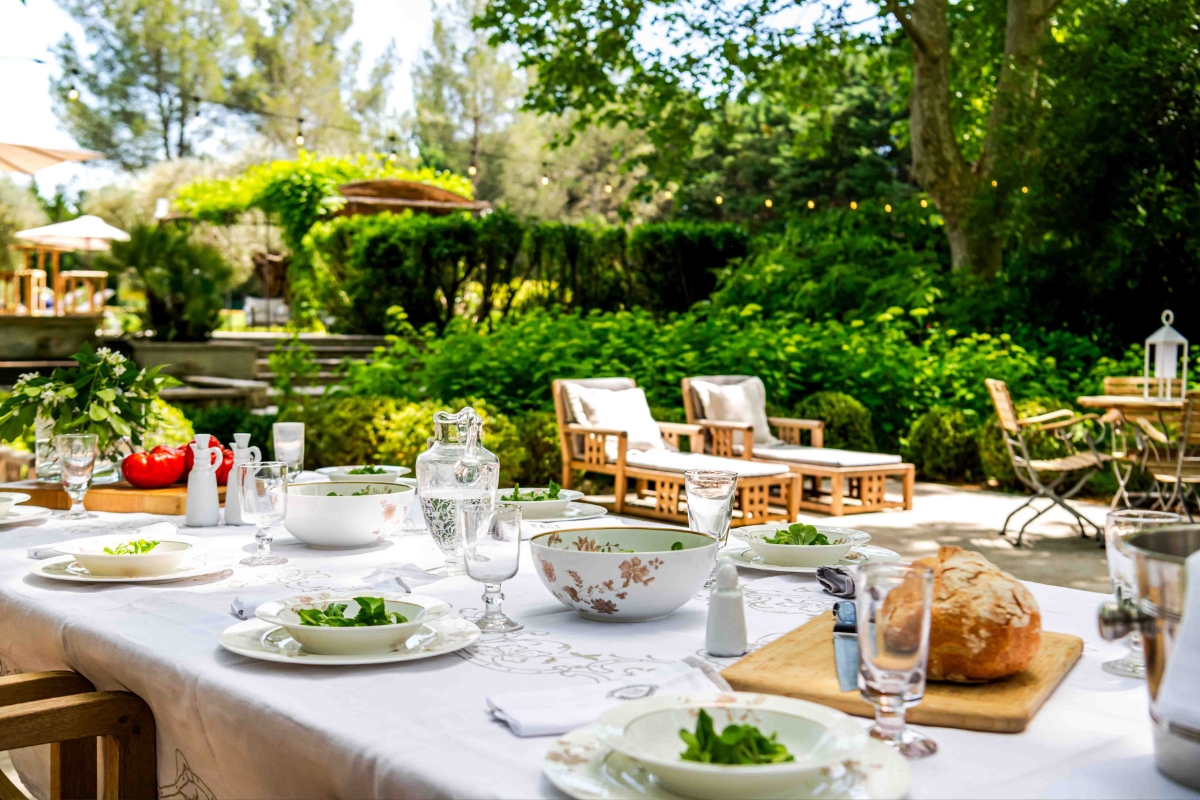
See properties offering a 10% discount on any 2027 reservation if booked before November 15 2026.

Luxury Villas to Rent South of France
Home » Our Provence Journal » Arles in Provence: Roman Ruins, Van Gogh’s Legacy, and Provençal Life
Provence Travel Guide
Arles in Provence: Things to See and Do in Arles, France
Arles in Provence is a city in southern France where Roman monuments, Van Gogh's most famous paintings and everyday Provençal life share the same streets. This guide covers what to see and do in Arles, how to spend one day there, the best day trips from Arles into Provence, when to visit, how to get there and where to stay nearby.
Planning a villa holiday in the region? Contact a Villa Rental Specialist and we will help you build Arles into your Provence itinerary.
UNESCO status
World Heritage, 1981
Van Gogh in Arles
300+ works in 15 months
Best market day
Saturday morning
From Avignon
45 min by train
Why Visit Arles in Provence?
Arles sits on the Rhône in the heart of Provence, about 45 minutes from Avignon by train and an hour from Marseille. Few cities outside Italy preserve the Roman world as vividly. The amphitheatre still fills with crowds, the ancient theatre still echoes with music, and UNESCO recognised Arles as a World Heritage Site in 1981.
Arles is also the city where Vincent van Gogh produced more than 300 works in just 15 months, and every summer it becomes the world capital of photography during the Rencontres d'Arles. Add one of the largest markets in Provence, a cuisine shaped by the neighbouring Camargue, and easy access to Avignon, Nîmes, Les Baux-de-Provence and the Alpilles, and Arles becomes one of the most rewarding destinations in southern France.
Whether you are here for a day or using a nearby villa as a base for a week, Arles offers a complete taste of Provence: history, art, food and the warm light that artists have chased for centuries.
Roman Monuments and Historic Sites in Arles
Once a key outpost of the Roman Empire, Arles still carries the weight of its ancient grandeur in its streets and skyline. Rather than feeling frozen in time, these monuments remain part of daily life. Here are the Roman ruins and historic sites in Arles you should not miss.
Arles Amphitheatre
Built in the 1st century AD, the Arles Amphitheatre once held 20,000 spectators cheering on gladiators and chariot races. Today it hosts concerts, plays and bullfighting events, making it one of the rare ancient sites still woven into modern life.
Roman Theatre
Just a short walk from the amphitheatre, the 1st-century Roman Theatre once staged comedies and tragedies for 10,000 people. Only fragments remain, including two elegant columns, but its atmosphere is still strong during summer performances.
The Alyscamps
The Alyscamps is a Roman necropolis that became one of the most famous burial sites of antiquity, lined with stone sarcophagi and cypress trees. Van Gogh and Gauguin both painted here during their time in the city.
Baths of Constantine
The Baths of Constantine offer a rare glimpse into Roman daily life. These thermal baths once provided hot and cold rooms for relaxation and conversation.
Cryptoporticus
Beneath the old Forum lies the Cryptoporticus, a network of vaulted underground tunnels that remain remarkably well preserved and are open for visitors to explore. For Roman mosaics and artifacts recovered from the city, add the Musée de l’Arles Antique to your list.
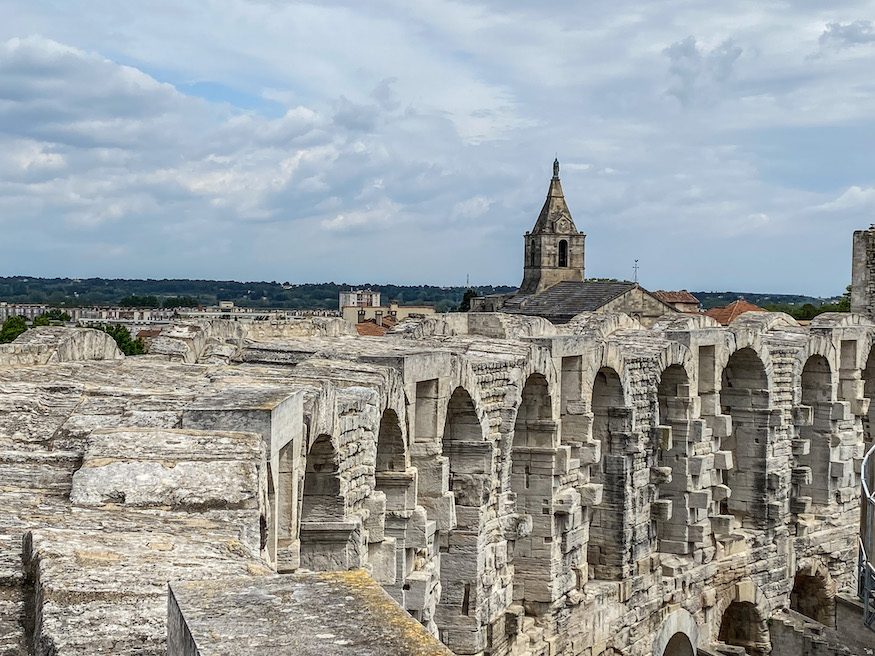
Stone arcades of the Arles Amphitheatre, seen from above.
Follow Van Gogh's Legacy in Arles
In 1888, Vincent van Gogh arrived in Arles searching for sunlight and new inspiration. In just 15 months he created more than 300 works, including some of his most famous paintings: The Yellow House, Café Terrace at Night and Starry Night Over the Rhône.
The Van Gogh walking trail maps out the key sites that inspired him, from the café on Place du Forum to the banks of the Rhône and the Alyscamps. While the original Yellow House was destroyed in the Second World War, the spirit of Van Gogh's time here lingers everywhere.
The Fondation Vincent van Gogh Arles, opened in 2014, bridges his legacy with contemporary art through regularly rotating exhibitions that explore his influence on modern creativity. For art lovers, it is an essential stop.
Arles gave him something vital: light, color, and a burst of creativity that changed art forever.
Van Gogh’s time in Arles was not easy. His friendship with Gauguin ended in turmoil, and his health struggles worsened.
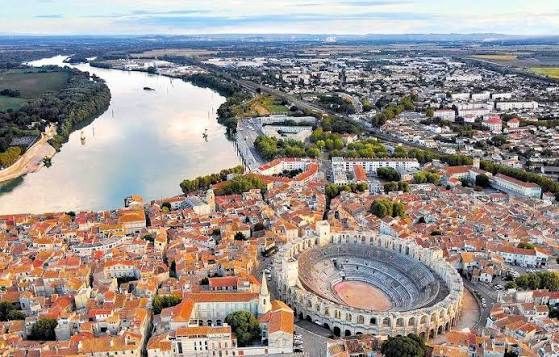
Arles from above: the amphitheatre, the old town and the Rhône.
What to See and Do in Arles, France
If you are wondering what to do in Arles, these are the experiences that define a visit. Most sit within the compact historic center, so you can walk between them easily.
- Explore the historic center. Arles’s old town is a maze of cobbled streets, shaded squares, and honey-colored stone, with Place de la République at its heart.
- Visit the Arles Amphitheatre. The city’s signature monument and the best place to grasp the scale of Roman Arles.
- See the Roman Theatre. Pair it with the amphitheatre; the two sit minutes apart.
- Follow the Van Gogh trail. Walk the route past the café on Place du Forum, the riverbank, and the Alyscamps.
- Visit the Fondation Vincent van Gogh. Contemporary exhibitions in dialogue with Van Gogh’s work and legacy.
- Explore the Arles market. Wednesday and Saturday mornings, with Saturday the larger of the two.
- Visit the Musée de l’Arles Antique. Roman mosaics and artifacts that bring the ancient city to life.
- Linger on Place du Forum. Café terraces and the square Van Gogh painted. Ideal for an aperitif and people-watching.
- Walk along the Rhône. The riverside is the best place to take in the Provençal sunset that drew painters here.
- Experience Provençal food and culture. Camargue bull stew, local rice and Rhône wines, and in summer the Rencontres d’Arles photography festival.
Stay close to the sights in a private Provence villa.
Find a VillaArles Market, Festivals, and Provençal Life
Arles may be steeped in history, but it is also very much alive. The best way to feel its pulse is through its markets and festivals.
The Arles Market
Held twice weekly on Wednesdays and Saturdays, the Arles market is one of the largest in Provence. Saturday is the big one, stretching for nearly two kilometers along the boulevards. You will find seasonal produce, olives, lavender honey, Provençal fabrics, cured meats, and goat cheeses alongside stalls selling antiques, clothing, and household items. It is a reminder that Arles is not just for tourists; it is a real working city where locals come to shop and socialize.
Festivals in Arles
- Rencontres d'Arles Photography Festival. Every summer since 1970, Arles transforms into the world capital of photography. Exhibits pop up in historic chapels, warehouses, and Roman ruins, attracting artists and visitors from around the globe.
- Feria d'Arles. This twice-yearly bullfighting festival fills the streets with parades, music, and dancing. Even if you skip the corrida, the atmosphere in town is electric.
- Traditional fêtes. Throughout the year, smaller events celebrate Provençal costumes, folk music, and heritage.
Plan around more markets and events with our Provence market days guide and festivals of Provence.
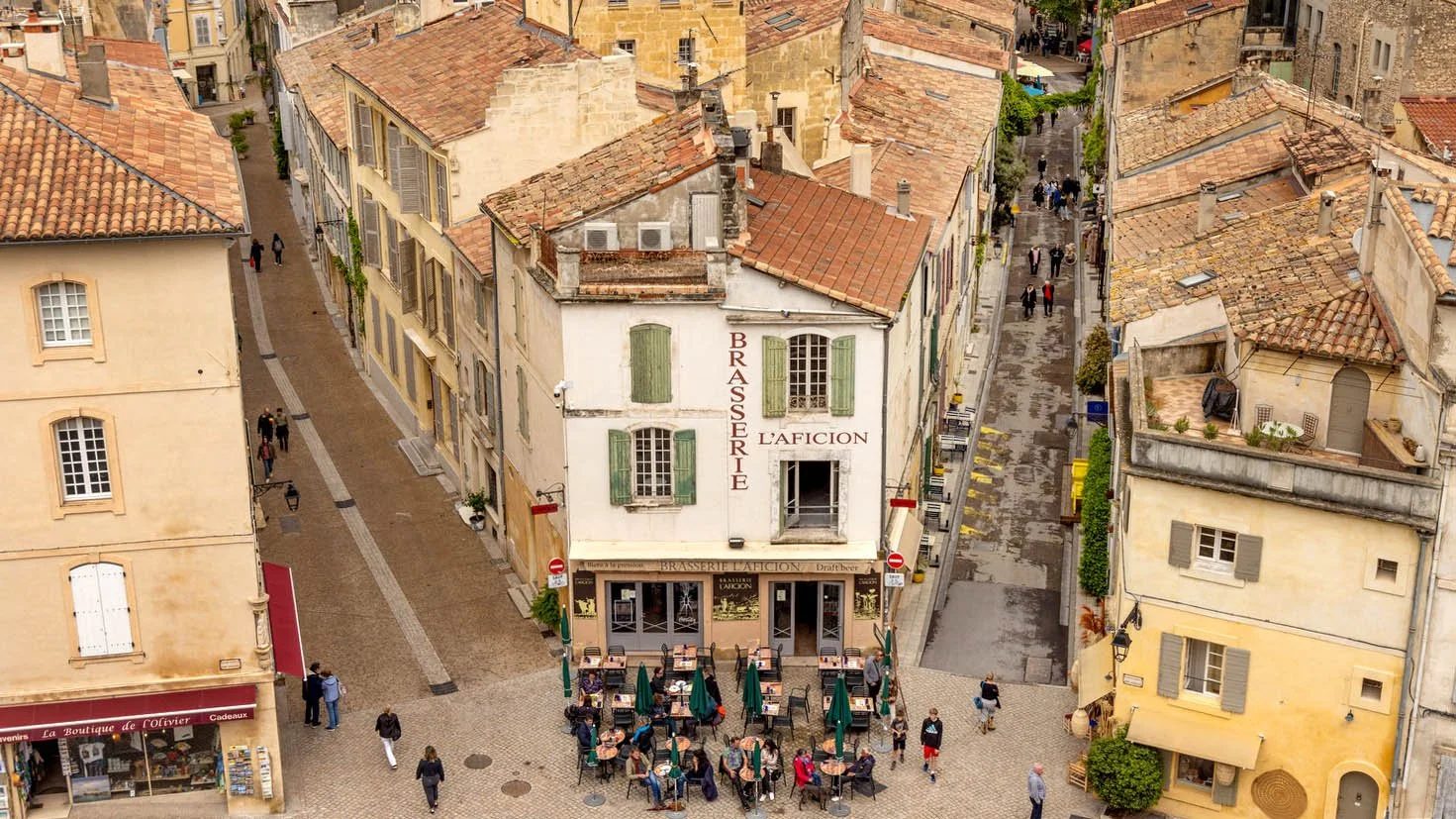
A café terrace in the old town of Arles.
Food and Wine in Arles
To understand Arles, you have to taste it. Here, Provençal traditions meet the rustic flavors of the Camargue, creating a cuisine that is hearty, vibrant, and deeply connected to the land.
Local dishes
Try gardianne de taureau, a slow-cooked bull stew that nods to the Camargue’s cattle culture, or brandade de morue, a creamy salt cod dish. Ratatouille and aioli platters showcase Provence’s love of fresh vegetables and garlic.
Camargue influence
Arles’s position beside the Camargue wetlands brings local rice, fresh seafood, and salt harvested from the nearby marshes.
Wine
Arles sits near the Rhône Valley, so expect excellent wines, from the bold reds of Châteauneuf-du-Pape to crisp rosés from Costières de Nîmes.
For dining, the old town is full of charming bistros and terraces. A few standouts:
- Le Gibolin. A cozy bistro popular with locals.
- L’Atelier de Jean-Luc Rabanel. Michelin-starred, with inventive takes on Provençal cuisine.
- Cafés on Place du Forum. Perfect for people-watching in the same square Van Gogh painted.
Food in Arles is less about luxury and more about authenticity: simple dishes made with the freshest ingredients from the market. Want a chef in your villa kitchen? Ask about private chefs.
Arles for a Day: A One-Day Itinerary
Can you see Arles in one day? Yes. The historic centre is compact and walkable, and the main sights sit close together. Here is how to spend one day in Arles.
Morning: Roman Arles
- Start at the Arles Amphitheatre early, before the crowds build.
- Walk the short distance to the Roman Theatre.
- Wander through the historic center to Place de la République.
- Visit the Cryptoporticus beneath the Forum, then surface on Place du Forum for a coffee.
Afternoon: Van Gogh and the market
- Lunch at a bistro in the old town. On a Wednesday or Saturday, graze through the Arles market instead and pick up picnic supplies.
- Follow the Van Gogh trail from Place du Forum to the Rhône.
- Visit the Fondation Vincent van Gogh or the Musée de l’Arles Antique if you prefer antiquities.
- Finish at the Alyscamps, among the sarcophagi and cypress trees.
Evening: Place du Forum and the Rhône
- Aperitif on Place du Forum.
- Walk the Rhône riverbank as the sun sets, the view that inspired Starry Night Over the Rhône.
- Dinner in the old town: gardianne de taureau, Camargue rice, and a glass of local wine.
Have two or three days? Add the Camargue and Les Baux-de-Provence as day trips, described below.
Best Day Trips from Arles in Provence
Arles is a destination in its own right, but its location also makes it a perfect springboard for exploring Provence. Within an hour, you can trade Roman stones for lavender fields, step into medieval palaces, or find yourself among flamingos in the Camargue.
Have two or three days? Add the Camargue and Les Baux-de-Provence as day trips, described below.
Just south
The Camargue
A wild landscape of wetlands, pink flamingos, white horses, and black bulls. Do not miss Saintes-Maries-de-la-Mer, known for its gypsy pilgrimage and beaches.
45 min by train
Avignon
Home to the Palais des Papes and the famous Pont d’Avignon.
30 min by train
Nîmes
Another Roman gem, with its own amphitheatre and the Maison Carrée temple.
Hilltop village
Les Baux-de-Provence
A stunning village with panoramic views and the immersive Carrières de Lumières art show.
Scenic drives
The Alpilles
The hills around Les Baux are olive-grove and vineyard country, ideal for scenic drives, cycling, and long lunches in small villages.
June and July
Luberon and lavender
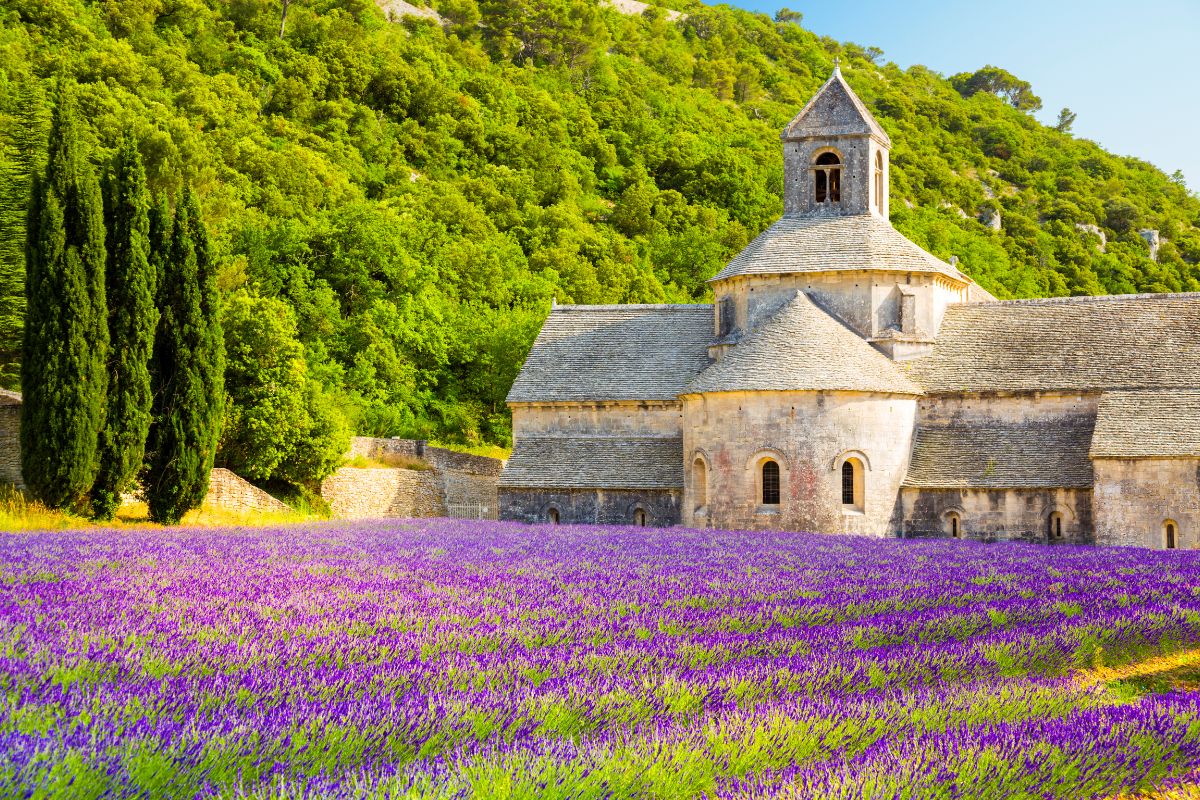
A little further afield, the hilltop villages of the Luberon and the lavender fields of Provence make a full and memorable day.
For more ideas across the region, explore our guide to the villages in Provence.
When Is the Best Time to Visit Arles?
Arles is a year-round destination, but each season offers something different.
- Spring (April to June). Mild weather, blooming landscapes, and lively markets.
- Summer (July and August). Festivals, concerts in the amphitheatre, and long evenings, but also hotter temperatures and more crowds. Visit the monuments early in the day.
- Autumn (September and October). Harvest season, cooler days, and fewer tourists.
- Winter (November to March). Quiet and atmospheric, and ideal for exploring without crowds.
The Saturday market runs year-round, so whichever season you choose, try to be in Arles on a Saturday morning.
How to Get to Arles
- By train. Direct routes from Marseille (about 1 hour), Avignon (about 45 minutes), and Nîmes (about 30 minutes).
- By air. The nearest airports are Marseille Provence (70 km) and Nîmes-Alès-Camargue-Cévennes (25 km).
- Getting around. The city itself is walkable, and cycling is popular for exploring the Rhône and the Camargue. A car is useful if you plan day trips to nearby villages or the countryside and essential if you are staying in a countryside villa.
Where to Stay near Arles
Exploring Arles and the surrounding region is even more rewarding when you have a Provençal home base to return to at the end of the day. A private villa offers the best of both worlds: proximity to historic towns and markets, plus the privacy, space, and comfort that make your trip unforgettable. Imagine mornings with fresh croissants by the pool, afternoons wandering Roman streets or lavender fields, and evenings gathered around a long table with local wine and friends.
The countryside around the Alpilles and Les Baux-de-Provence, and the villages between Arles and Avignon, all make ideal bases for exploring Arles and the Camargue.
Only Provence offers the largest curated collection of luxury villas in the region, from historic stone farmhouses to contemporary estates with sweeping views. Each property is hand-selected for character, comfort, and authenticity, with concierge services available to arrange everything from private chefs to guided tours.
Alpilles
Olive groves and vineyards, minutes from Les Baux.
Les Baux-de-Provence
Hilltop views and a short drive to Arles.
Arles to Avignon
Village bases between both cities.
Ready to experience the magic of Provence for yourself? Contact a villa rental specialist today to begin planning your stay and find the perfect villa from which to explore Arles, the Camargue, and beyond.
Plan your Arles stay with a Villa Rental Specialist
Tell us your dates and group size. We will match you with villas near Arles and arrange chefs, tours and more.
Questions
FAQ about Visiting Arles
Yes. Arles is in Provence, in southern France, on the Rhône between Avignon and the Camargue. It is one of the region's most important historic cities.
The highlights are the Arles Amphitheatre and Roman Theatre, the Van Gogh walking trail and the Fondation Vincent van Gogh, the Saturday market, the Musée de l'Arles Antique, Place du Forum and a sunset walk along the Rhône. In summer, add the Rencontres d'Arles photography festival.
Yes. The historic centre is compact and the main monuments sit close together. Follow the one-day itinerary above to cover the Roman sites in the morning, Van Gogh and the market in the afternoon, and Place du Forum and the Rhône in the evening.
Prioritize the Arles Amphitheatre, the Roman Theatre, Place de la République, the Van Gogh trail, Place du Forum and the Rhône riverbank. If it is a Wednesday or Saturday, make time for the market.
One day covers the highlights. Two to three days give time for the museums, a slower market morning and day trips to the Camargue, Les Baux-de-Provence or Avignon. Many visitors base themselves in a villa nearby and return to Arles across the week.
Arles is famous for its Roman amphitheatre and UNESCO World Heritage monuments, for Van Gogh's paintings including Café Terrace at Night and Starry Night Over the Rhône, for the Rencontres d'Arles photography festival and for one of the largest markets in Provence.
The Camargue, Avignon, Nîmes, Les Baux-de-Provence and the Alpilles are all within about an hour of Arles. The Luberon villages and lavender fields make a longer but rewarding day.
Yes. Arles is about 45 minutes by train from Avignon, 30 minutes from Nîmes and an hour from Marseille, and an easy drive from villas across the region. Staying nearby lets you experience the quieter, more authentic side of the city in the early morning and evening.
Gardianne de taureau (Camargue bull stew), Camargue rice, brandade de morue, and Provençal classics such as ratatouille and aioli, paired with wines from the nearby Rhône Valley and Costières de Nîmes.
Absolutely. Arles combines Roman history, Van Gogh's legacy, Provençal markets and access to the Camargue in a single walkable city. Few destinations in Provence pack in as much variety, and it sits within easy reach of most villa locations in the region.
Uncover the Timeless Charm of Arles

Arles is one of those rare places where time seems to fold in on itself. Roman stones sit beside medieval churches, cafés line the same boulevards that Vincent van Gogh once sketched, and the Provençal sun continues to cast that warm glow artists have been chasing for centuries.
For travelers exploring Provence, Arles is more than a stopover. It’s a city that rewards curiosity — whether you’re wandering cobbled streets, exploring ruins, tasting local wines, or simply sitting along the Rhône watching the light shift. This guide dives into the history, culture, and experiences that make Arles one of southern France’s most unforgettable destinations.
Roman Monuments of Arles
Few cities outside Italy preserve the Roman world as vividly as Arles. Once a key outpost of the Roman Empire, the city still carries the weight of its ancient grandeur in its streets and skyline. The scale of its amphitheater, the solemn beauty of its necropolis, and the quiet presence of its underground passages make it clear why UNESCO recognized Arles as a World Heritage site in 1981. Rather than feeling frozen in time, these monuments remain an integral part of daily life — arenas still fill with crowds, ancient theaters echo with music, and centuries-old stones continue to shape the rhythm of the city.
- The Arles Amphitheater: Built in the 1st century AD, this arena once held 20,000 spectators cheering on gladiators and chariot races. Today, it hosts concerts, plays, and even bullfighting events, making it one of the rare ancient sites still woven into modern life.
- Roman Theatre: Just a short walk away, this 1st-century theatre once staged comedies and tragedies for 10,000 people. Only fragments remain, including two elegant columns, but its atmosphere is still strong during summer performances.
- The Alyscamps: This Roman necropolis became one of the most famous burial sites of antiquity, lined with stone sarcophagi and cypress trees. Van Gogh and Gauguin even painted here during their time in the city.
- Baths of Constantine: A rare glimpse into Roman daily life, these thermal baths once offered hot and cold rooms for relaxation and conversation.
- Cryptoporticus: A network of underground tunnels beneath the old Forum, these vaulted corridors remain remarkably well preserved and are open for visitors to explore.
Walking through Arles is like stepping into a living museum — except this one still hosts concerts, markets, and festivals that you can visit.


Van Gogh's Legacy in Arles
In 1888, Vincent van Gogh arrived in Arles, searching for sunlight and new inspiration. In just 15 months, he created over 300 works, including some of his most famous paintings: The Yellow House, Café Terrace at Night, and Starry Night Over the Rhône.
The Van Gogh walking trail maps out key sites that inspired him, from the Place du Forum café to the banks of the Rhône. While the original Yellow House was destroyed in WWII, the spirit of Van Gogh’s time here lingers everywhere.
The Fondation Vincent van Gogh Arles, opened in 2014, bridges his legacy with contemporary art, regularly rotating exhibitions that explore his influence on modern creativity. For art lovers, it’s an essential stop.
Van Gogh’s time in Arles wasn’t easy — his friendship with Gauguin ended in turmoil, and his mental health struggles worsened. But it’s impossible to deny that Arles gave him something vital: light, color, and a burst of creativity that changed art forever.


Markets, Festivals & Provençal Life
Arles may be steeped in history, but it’s also very much alive. The best way to feel its pulse is through its markets and festivals.
The Arles Market: Held twice weekly (Wednesdays and Saturdays), the Arles market is one of the largest in Provence. Saturday is the big one, stretching for nearly two kilometers along the boulevards. You’ll find seasonal produce, olives, lavender honey, Provençal fabrics, cured meats, and goat cheeses — alongside stalls selling antiques, clothing, and household items.
It’s a sensory overload in the best way, and a reminder that Arles isn’t just for tourists; it’s a real working city where locals come to shop and socialize.
Festivals in Arles
Rencontres d’Arles Photography Festival: Every summer since 1970, Arles transforms into the world capital of photography. Exhibits pop up in historic chapels, warehouses, and Roman ruins, attracting artists and visitors from around the globe.
Feria d’Arles: This twice-yearly bullfighting festival fills the streets with parades, music, and dancing. Even if you skip the corrida, the atmosphere in town is electric.
Traditional fêtes: Throughout the year, you’ll find smaller events celebrating Provençal costumes, folk music, and heritage.
These gatherings give Arles a unique energy, blending its historic roots with a lively modern identity.

Food, Wine and Dining in Arles
To understand Arles, you have to taste it. The city’s identity is tied as much to its kitchens and markets as to its amphitheatre and galleries. Here, Provençal traditions meet the rustic flavors of the Camargue, creating a cuisine that is hearty, vibrant, and deeply connected to the land. From stews simmered with local bull meat to the crisp rosés poured from nearby vineyards, eating in Arles is less about ceremony and more about savoring authenticity at every table.
- Local Dishes: Try gardianne de taureau, a slow-cooked bull stew (a nod to the Camargue’s cattle culture), or brandade de morue, a creamy salt cod dish. Ratatouille and aioli platters showcase Provence’s love for fresh vegetables and garlic.
- The Camargue Influence: Being close to the Camargue wetlands, Arles offers local rice, fresh seafood, and salt harvested from the nearby marshes.
- Wine: Arles sits near the Rhône Valley, so expect excellent wines, from bold reds of Châteauneuf-du-Pape to crisp rosés from Costières de Nîmes.
For dining, the old town is full of charming bistros and terraces. A few standouts include:
- Le Gibolin: A cozy bistro popular with locals
- L’Atelier de Jean-Luc Rabanel: Michelin-starred, with inventive takes on Provençal cuisine.
- Cafés on Place du Forum: Perfect for people-watching in the same square Van Gogh painted.
Food in Arles is less about luxury and more about authenticity — simple dishes made with the freshest ingredients from the market.

Top Things To Do in Arles
- Tour the Arles Amphitheatre and Roman Theatre
- Visit the Fondation Vincent van Gogh
- Wander through the Alyscamps necropolis
- Explore the Saturday market for food and crafts
- Attend the Rencontres d’Arles Photography Festival (summer)
- Visit the Musée de l’Arles Antique for mosaics and Roman artifacts
- Stroll the old town streets and relax at riverside cafés
- Take in the Provençal sunset over the Rhône

Day Trips Around Arles
Arles is a destination in its own right, but its location also makes it a perfect springboard for exploring some of Provence’s most iconic landscapes and towns. Within an hour, you can trade Roman stones for lavender fields, step into medieval palaces, or find yourself among flamingos in the Camargue.
Whether you’re chasing history, nature, or small-village charm, the region around Arles offers day trips that feel like entirely new worlds waiting just beyond the city.
- The Camargue: Just south of Arles lies the Camargue, a wild landscape of wetlands, pink flamingos, white horses, and black bulls. Don’t miss the town of Saintes-Maries-de-la-Mer, known for its gypsy pilgrimage and beaches.
- Avignon: About 45 minutes away by train, Avignon is home to the Palais des Papes and the famous Pont d’Avignon.
- Nîmes: Another Roman gem, with its own amphitheatre and Maison Carrée temple.
- Les Baux-de-Provence: A stunning hilltop village with panoramic views and the immersive Carrières de Lumières art show.
- Provençal countryside: Lavender fields (in June–July), olive groves, and vineyards surround Arles, offering endless opportunities for drives, bike rides, and picnics.




When To Visit & Travel Tips
Best Seasons
- Spring (April–June): Mild weather, blooming landscapes, and lively markets.
- Summer (July–August): Festivals and long evenings, but also hotter temperatures and more crowds.
- Autumn (September–October): Harvest season, cooler days, and fewer tourists.
- Winter (November–March): Quiet, atmospheric, and great for exploring without crowds.
Getting There: Arles is well connected by train, with direct routes from Marseille (1 hour), Avignon (45 minutes), and Nîmes (30 minutes). The nearest airports are Marseille Provence (70 km) and Nîmes-Alès-Camargue-Cévennes (25 km).
Getting Around: The city itself is walkable, and cycling is popular for exploring the Rhône and Camargue. A car is useful if you plan on day trips to nearby villages or countryside.

Why Arles Captures the Spirit of Provence
Arles is more than a city of monuments. It’s a place where the past and present coexist — where Roman amphitheatres still host performances, where Van Gogh’s brushstrokes still echo in the light, and where Provençal culture thrives in markets and festivals. Whether you’re here for history, art, food, or simply the atmosphere, Arles offers a complete taste of Provence.
Spend a day, or spend a week. Either way, Arles leaves its mark — as it has for centuries on emperors, artists, and travelers alike.
Stay in Provence: Your Villa Awaits
Exploring Arles and the surrounding region is even more rewarding when you have a Provençal home base to return to at the end of the day. A private villa offers the best of both worlds — proximity to historic towns and markets, along with the privacy, space, and comfort that make your trip unforgettable. Imagine mornings with fresh croissants by the pool, afternoons wandering Roman streets or lavender fields, and evenings gathered around a long table with local wine and friends.
Only Provence offers the largest curated collection of luxury villas in the region, from historic stone farmhouses to contemporary estates with sweeping views. Each property is hand-selected for character, comfort, and authenticity, with concierge services available to arrange everything from private chefs to guided tours.
Ready to experience the magic of Provence for yourself? Contact a Villa Rental Specialist today to begin planning your stay and find the perfect villa from which to explore Arles, the Camargue, and beyond.

FAQ About Visiting Arles
Is Arles worth visiting?
Yes. Arles combines Roman history, Van Gogh’s legacy, Provençal culture, and access to the Camargue. Few cities pack in as much diversity.
How many days do you need in Arles?
One day covers highlights, but two to three days give time for markets, museums, and day trips.
What is Arles most famous for?
Its Roman amphitheatre, UNESCO monuments, Van Gogh’s paintings, and the Rencontres d’Arles Photography Festival.
Can you visit Arles as a day trip?
Yes, it’s easy from Avignon, Nîmes, or Marseille. Staying overnight, though, lets you experience the quieter, more authentic side of the city.
What food is Arles known for?
Dishes like bull stew (gardianne de taureau), Camargue rice, and Provençal classics like ratatouille and aioli.
When is the best time to visit the Arles market?
Saturday mornings, when the market is at its largest and liveliest.

Get Our Latest Updates
Subscribe To Our Weekly Email
Receive updates about new luxury villas, special offers, and seasonal news from the heart of Provence.
Recent Articles

Find Us On Social
Recent Articles You Might Enjoy
The Best Luxury Hotels in Provence, and Why So Many Guests Choose a Villa
Provence’s finest luxury hotels, from Gordes to Les Baux, and an honest look at why so many guests choose a private villa instead for their stay. […]
Read More… from The Best Luxury Hotels in Provence, and Why So Many Guests Choose a Villa
Service Compris: A Guide to Tipping in France
In France, service is included by law, so tipping is a gesture, not an obligation. Here is what is customary for waiters, taxi drivers, hotel and villa staff. […]
Read More… from Service Compris: A Guide to Tipping in France
Finding the Right Home for Your Retreat in Provence
Find the perfect home for your Provence retreat. Discover what makes an estate special and explore curated properties like Mas de Lacoste for your next getaway. […]
Read More… from Finding the Right Home for Your Retreat in Provence
5 Luxury Villas in the Heart of Provence’s Wine Country
Five villas in the Luberon and the Alpilles, each set among vineyards, with private pools and room for a group. A closer look at staying in the heart of Provence wine country. […]
Read More… from 5 Luxury Villas in the Heart of Provence’s Wine Country




A distinct collection of luxury villa rentals and real estate for sale in the South of France
- offering all comforts and amenities - pool, housekeeping, and chef services.
© 2026 Only Provence
Contact Us:
Privacy settingsLuxury Rental Villas in Provence:
- Search By Name
- Villas Near Aix en Provence
- Villas Near Avignon
- Villas Near Luberon
- Villas Near Alpilles
- Large Villas & Chateaux
- Villas in Aix en Provence
- Villas in Avignon
- Villas in Bonnieux
- Villas in Gordes
- Villas in Goult
- Villas in Les Baux de Provence
- Villas in L’Isle sur la Sorgue
- Villas in Lourmarin
- Villas in Menerbes
- Villas in Paradou & Maussane
- Villas in Roussillon
- Villas in Rustrel
- Villas in Saint Rémy de Provence
Villages in Provence:


Only Provence co-founder Lydia Dean writes about their experiences raising a family, building a business in Provence, and later combining the love of travel with giving back in "Jumping the Picket Fence". In 2021, she published "Light Through the Cracks," a continuation of her journey, much of which has been based in Provence. Both books are available Amazon, Amazon.uk, and Amazon.Fr.