Aix-en-Provence
Your Guide to the City of Art, Water, and Timeless Provençal Living
Quick Link to a Section

Quick Link to a Section
The city blends art, culture, and a relaxed rhythm that makes every walk feel intentional. Terraces buzz in the mornings, squares glow in the late afternoon, and the energy shifts into something warm and social as the sun drops. The surrounding countryside brings another layer of beauty. Rolling vineyards, quiet lanes, and classic Provencal homes sit just minutes from the center. Artists, writers, and travelers have long been drawn to this balance of charm and calm.
Aix offers easy access to nearby villages, hiking trails, and the iconic Montagne Sainte-Victoire. It is a place to wander, taste, pause, and settle into the deep pleasures of Provençal life.
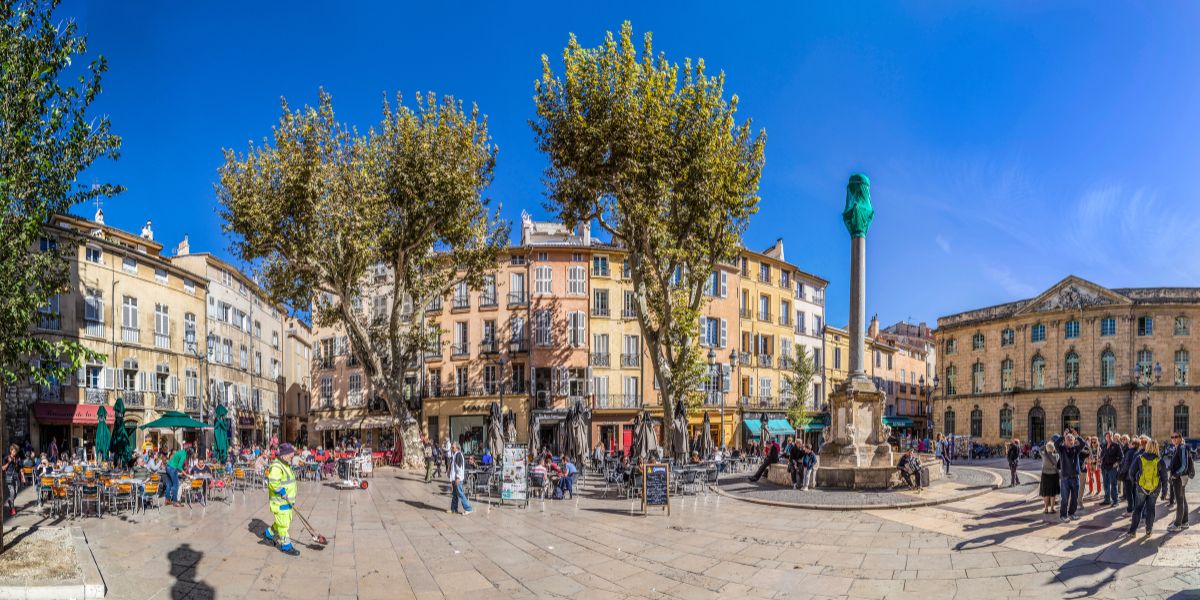
Aix-en-Provence began as a Roman settlement in 123 BC. It was founded around a natural hot spring, which made the area attractive for troops and traders. Over time it became an important administrative and military center.
By the fifteenth century, Aix rose in influence and became the capital of Provence under the Counts of Provence. They invested in architecture, education, and civic life. Wealthy families built mansions, fountains, and public squares. Many of these structures still shape the city.
Aix also became a center of learning. The University of Aix was founded in 1409 and helped define the city’s identity. Through the seventeenth and eighteenth centuries, Aix expanded with grand boulevards, formal gardens, and refined residences built by the regional elite.
In the modern era, Aix gained recognition for its artistic heritage. Paul Cézanne lived here and found endless inspiration in the local hills, farms, and rocky landscapes. His relationship with Montagne Sainte-Victoire forever linked the city to modern art.
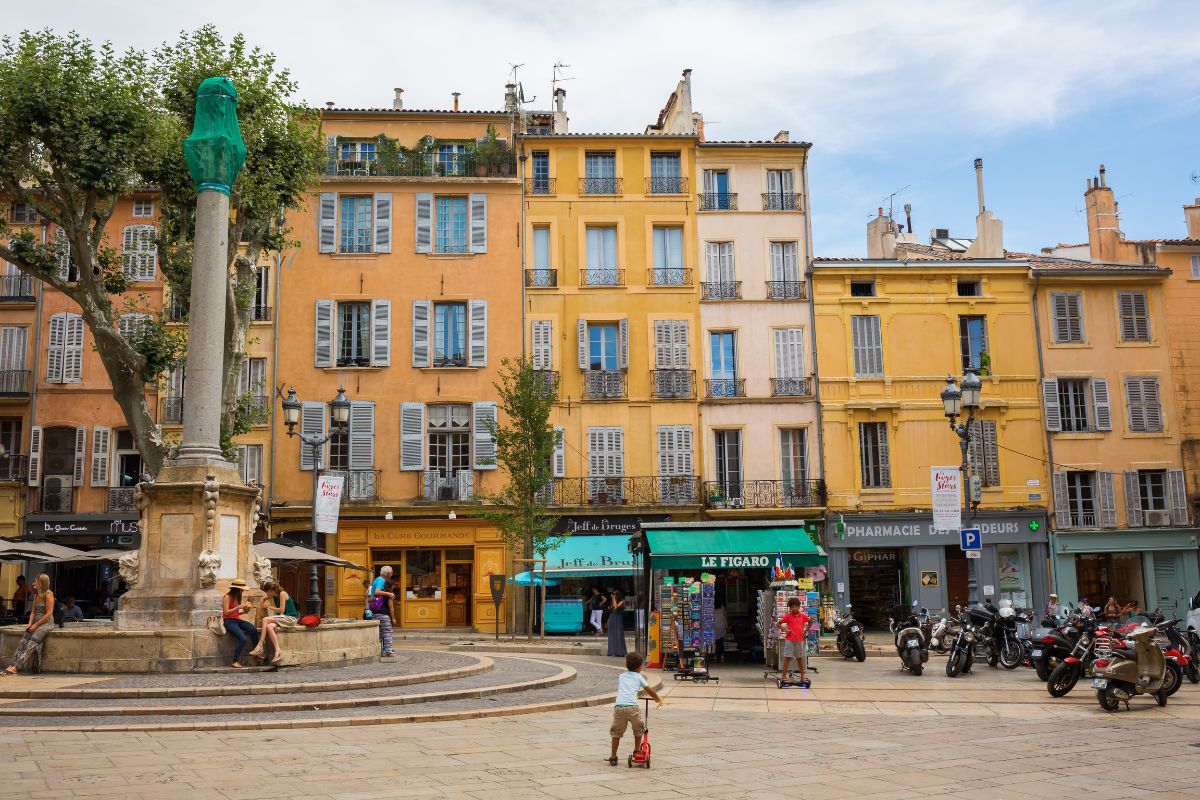
Today Aix blends historic elegance with a vibrant rhythm shaped by students, markets, festivals, and cultural events. The city maintains a strong dedication to arts, preservation, and daily life lived in its streets, plazas, and cafés. It is a place where old Provence and contemporary energy meet with natural ease.
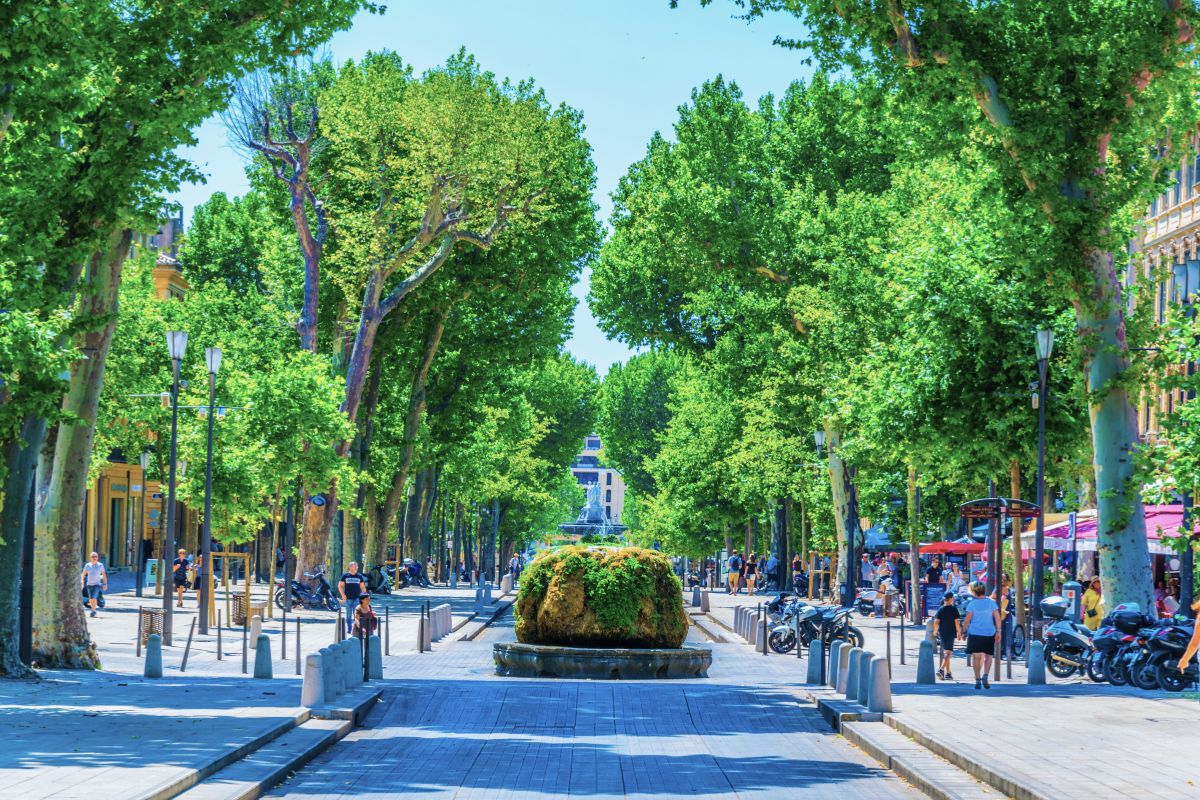


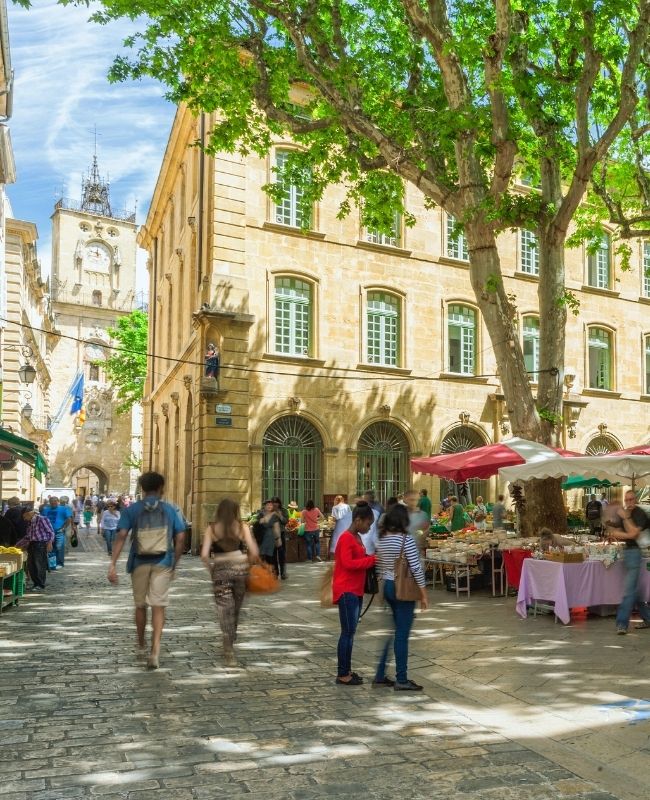
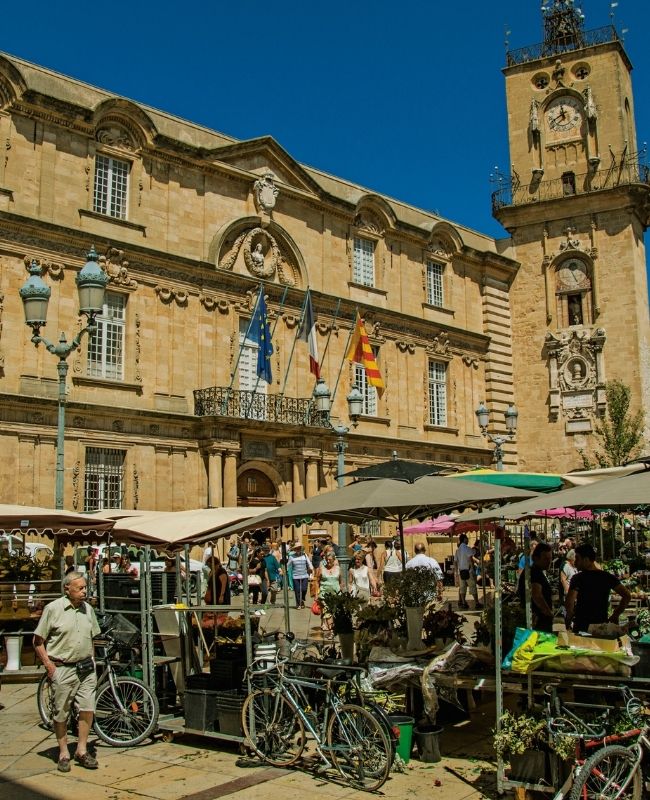
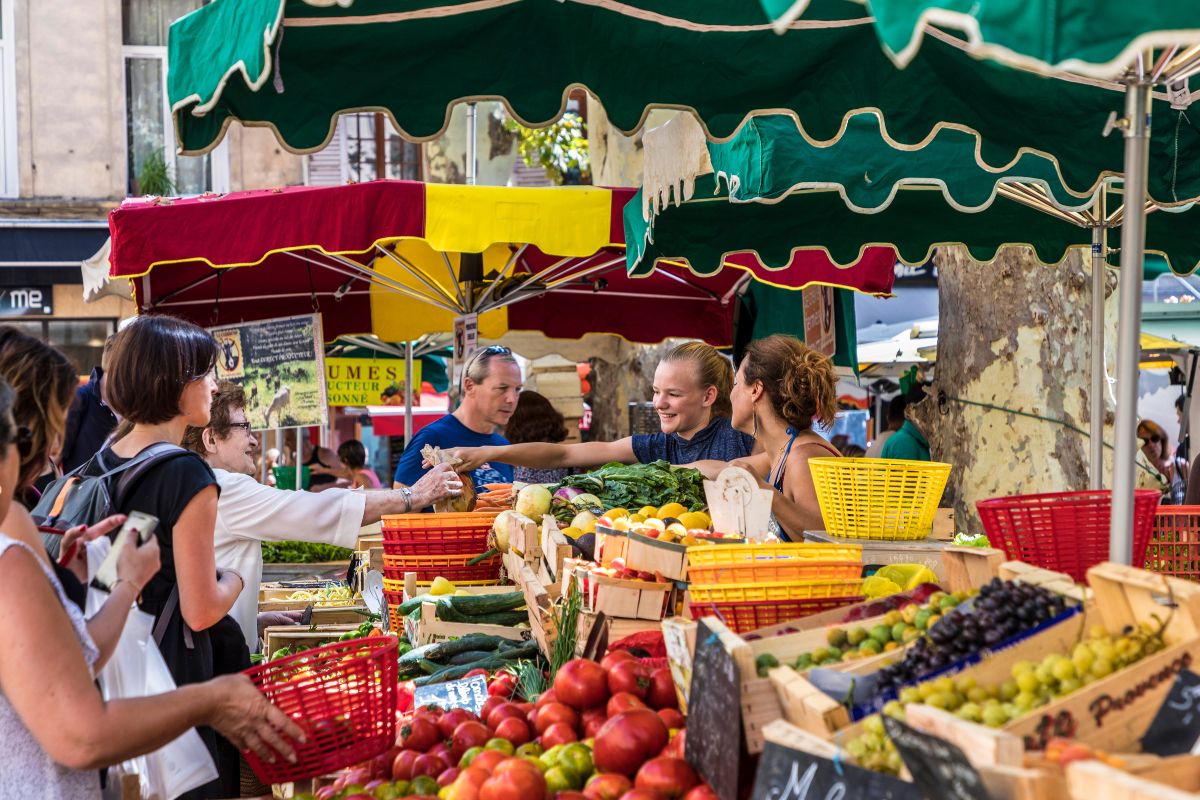
Markets run Monday through Saturday. The largest are on Tuesday, Wednesday, and Saturday, offering food, flowers, crafts, textiles, antiques, and local products.
Vendors set up across several central squares, creating an easy flow from one area to the next. You move through stalls with seasonal fruits, olives, and flowers, alongside stands offering linens, clothing, and handmade goods. The atmosphere stays relaxed, and it gives you a direct look at daily life in Provence. It is one of the simplest ways to experience the city’s rhythm and meet the people who shape its food and traditions.
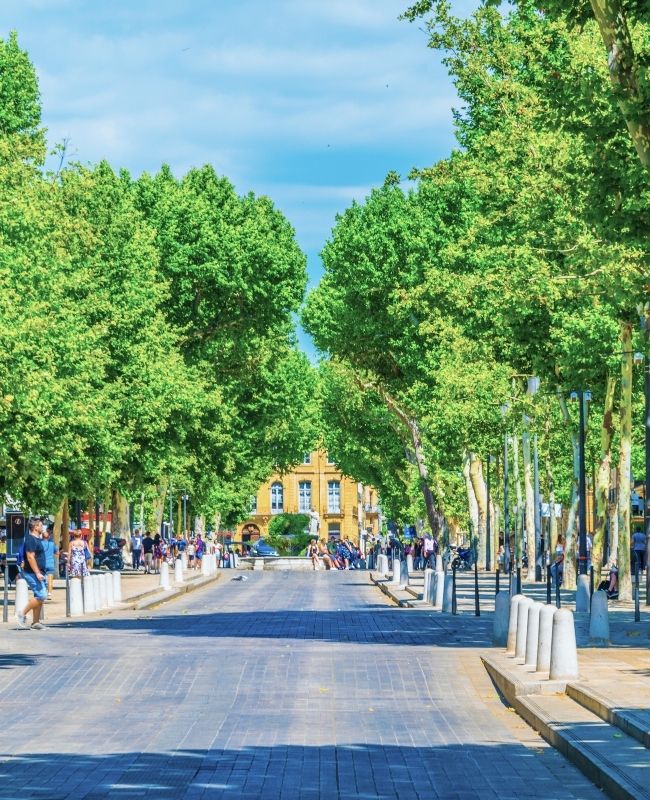
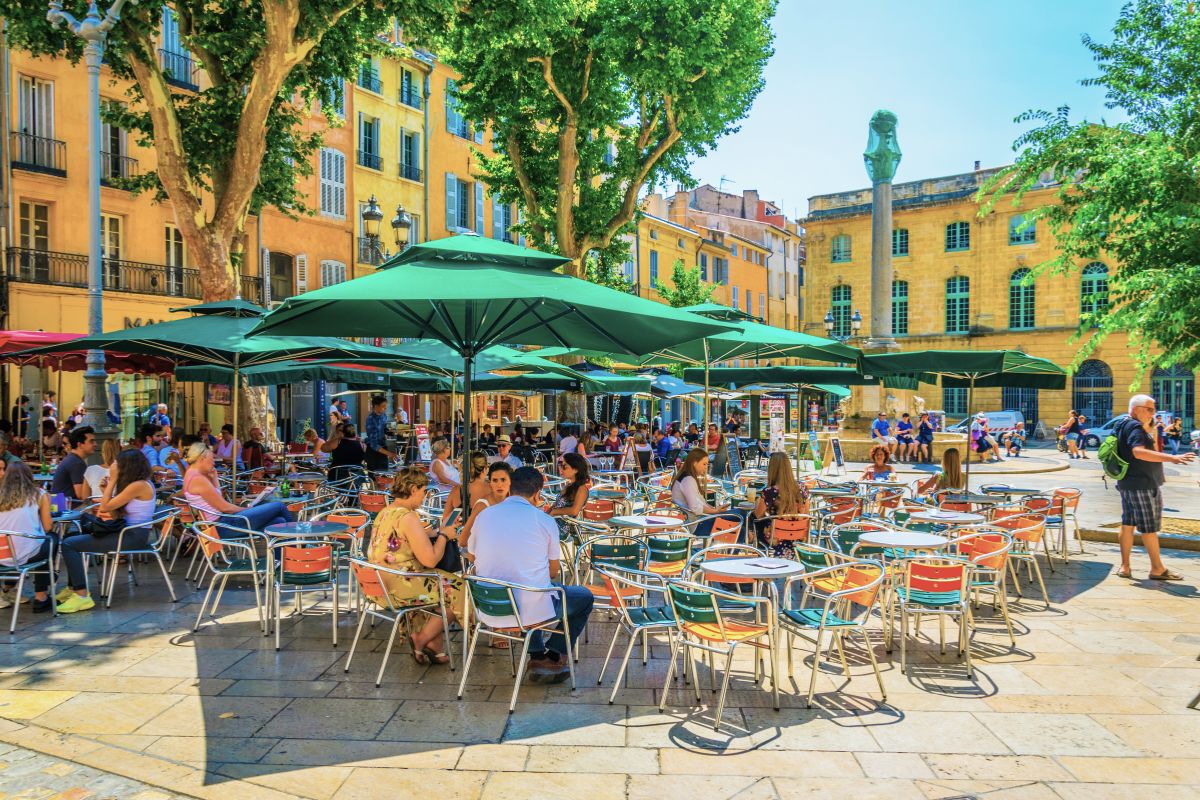
For current restaurant recommendations, refer to Google Maps, TripAdvisor or trusted local guides. Aix offers a broad range of cafés, bistros, and refined dining rooms spread throughout the historic center. The Cours Mirabeau remains a natural starting point, with its large terraces and steady flow of people, while the smaller streets in the old town offer quieter spots with seasonal menus and regional ingredients.
To help you navigate, visit our Google Maps link for Aix where we have tagged our preferred spots across the city:
Wineries Near Aix
While there are no vineyards in the center, several excellent wineries sit within a short drive:
Wine Shop in Aix
Le Fainoman Fou – Open Tuesday through Saturday
Pâtisserie Béchard – Famous for pastries and calissons, the local almond-melon confection.
Small épiceries are scattered throughout the center, and larger chain supermarkets include:
Monoprix
Monday–Saturday 8:30–21:00, Sunday 9:00–12:30
Carrefour La Pioline
Monday–Saturday 9:00–22:00
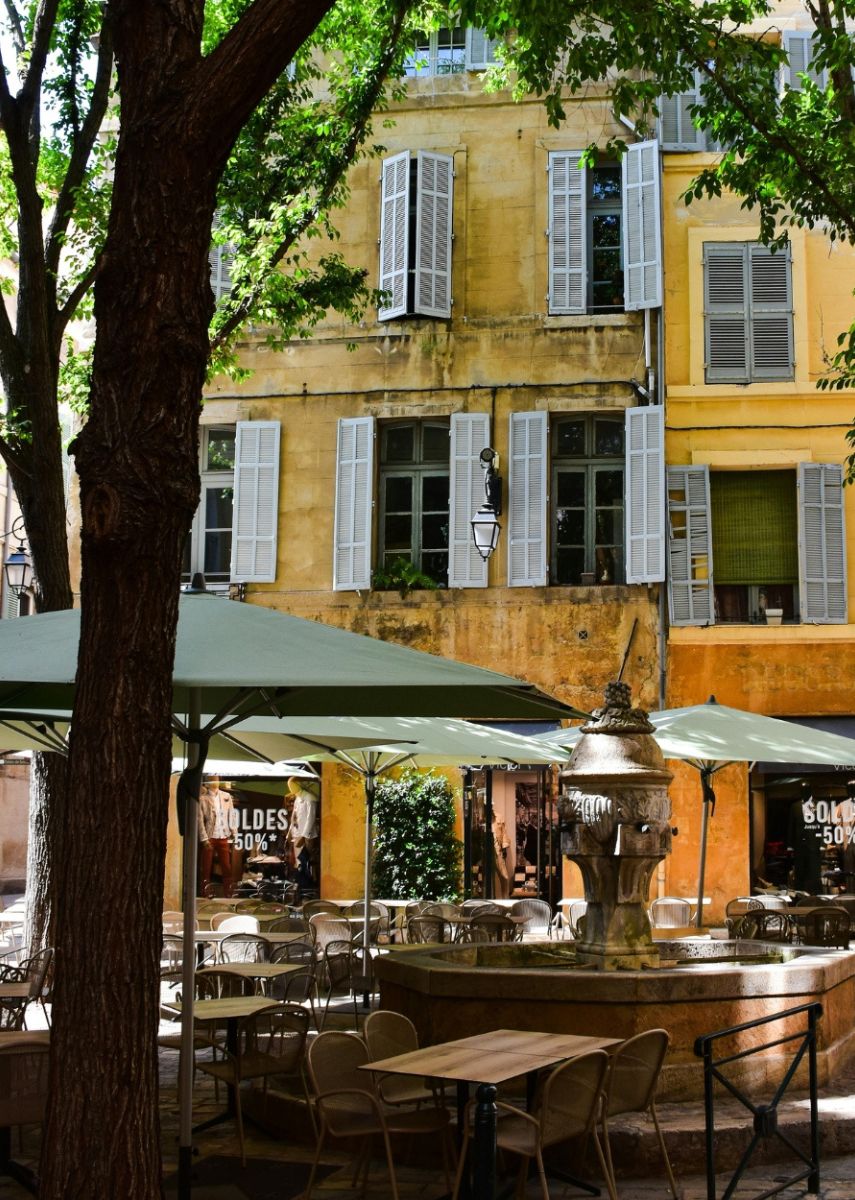
Spend a morning in the heart of Aix moving between the weekly markets and the Cours Mirabeau. Start with fresh produce and local specialties in the central squares, then walk toward the Cours for a coffee on a terrace.
This simple routine captures the city’s rhythm: open-air stalls, shaded fountains, and the steady flow of people beginning their day. It is the best way to experience the atmosphere that defines Aix and the moment when the city feels most alive.
Art and culture are woven into daily life in Aix-en-Provence. The city has long been a center for painters, writers, musicians, and thinkers, drawn by its light, elegance, and intellectual tradition. From grand museums and historic ateliers to quiet squares, fountains, and galleries tucked into old streets, Aix offers a cultural experience that feels both refined and effortlessly lived in.
Walk the marked trails around Montagne Sainte-Victoire for steady climbs, open air, and clear views of the countryside. The area offers routes for casual walkers and more committed hikers, all surrounded by calm and natural beauty. The vineyards outside the city welcome visitors for tastings, cellar visits, and short tours that explain local production. Many properties sit in quiet pockets of farmland, which makes each visit feel relaxed and personal.
You also have miles of narrow country roads lined with cypress trees and traditional homes. These routes are ideal for slow drives, morning runs, or easy bike rides when you want time and space to settle into the rhythm of Provence.
Visit nearby villages such as Lourmarin, Bonnieux, and Saint-Rémy for cafés, markets, galleries, and quiet strolls through historic streets. Each village has its own pace and makes an easy half-day trip from Aix. Château La Coste is another strong choice, offering a mix of contemporary art, architecture, and wine set across open grounds that you explore on foot. You also have the wider regions of the Luberon and the Alpilles within easy reach. Both offer scenic drives, boutique shops, shaded terraces, and long lunches that show the best of Provençal life.
Aix offers plenty of simple, enjoyable activities for families. Children like the open squares, fountains, and wide pedestrian areas where they can move safely. The Parc Jourdan provides lawns, shaded paths, and space to relax. The Terrain des Peintres gives an easy walk with open views of Sainte-Victoire.
Families can visit interactive museums such as the Fondation Vasarely, where bold shapes and color make the experience engaging for younger visitors. Local markets give children a chance to taste regional fruits, pastries, and sweets.
Answers to our most frequently asked questions.
Aix is known for its fountains, historic squares, art museums, markets, and refined lifestyle. The city has a strong cultural identity shaped by architecture, gastronomy, and daily outdoor life.
Yes. The historic center is compact with pedestrian streets, making it easy to move between squares, cafés, shops, and museums on foot.
Spring and early autumn offer mild temperatures, open terraces, and active markets. Summer is warmer and busier but full of events. Winter is quieter with fewer crowds.
Aix is known for calissons, olive oil, fresh produce from local farms, cheeses, pastries, and seasonal Provençal dishes served in bistros and restaurants across the old town.
Three to four days allow you to explore the city, visit nearby villages, see art sites, and enjoy the markets. Longer stays work well for day trips to the Luberon or the Alpilles.
You can rent a car for quick access to villages such as Lourmarin, Bonnieux, and Saint-Rémy. Local buses serve some routes. Private drivers are available for longer outings and vineyard visits.
- offering all comforts and amenities - pool, housekeeping, and chef services.
© 2026 Only Provence


Only Provence co-founder Lydia Dean writes about their experiences raising a family, building a business in Provence, and later combining the love of travel with giving back in "Jumping the Picket Fence”. In 2021, she published “Light Through the Cracks,” a continuation of her journey, much of which has been based in Provence. Both books are available Amazon, Amazon.uk, and Amazon.Fr.