Mary Magdalene and the Black Madonna: Provence's Sacred Feminine Trail

Mary Magdalene and the Black Madonna: Provence’s Sacred Feminine Trail

Written by the Only Provence Team • Last Updated June 19, 2026

Only Provence is an award-winning villa rental company with a collection of more than 200 luxury villas and châteaux throughout the Luberon and Alpilles. Combining deep local expertise with personalized service, we craft exceptional journeys tailored for discerning travelers.

There is a hidden geography to Provence that most visitors never discover. Beyond the lavender fields and hilltop villages lies an ancient pilgrimage route—one that traces the legendary journey of Mary Magdalene from the shores of the Mediterranean to a mountain cave where, tradition holds, she spent thirty years in contemplation and prayer.

This is one of Christianity’s oldest pilgrimage sites, a place that has drawn kings and saints, poets and seekers for nearly two millennia. It is also part of a deeper story: the veneration of the sacred feminine in southern France, expressed through mysterious Black Madonnas that have been worshipped here since long before recorded history.

Whether you approach these sites as a pilgrim, a historian, or simply a curious traveler, the Mary Magdalene trail offers something increasingly rare in our hurried world—an invitation to slow down, to walk ancient paths, and to encounter landscapes that still feel touched by the numinous.

The Arrival: A Boat Without Oars

The story begins, as so many Provençal legends do, with the sea.

According to tradition dating to the early medieval period, Mary Magdalene fled persecution in the Holy Land sometime around 47 AD. She was not alone. Cast adrift in a boat without sails or oars—a death sentence meant to provide plausible deniability for her persecutors—she was accompanied by her siblings Lazarus and Martha, along with other followers of Jesus: Mary Salome, Mary Jacobe, Saint Maximin, and a dark-skinned servant named Sarah.

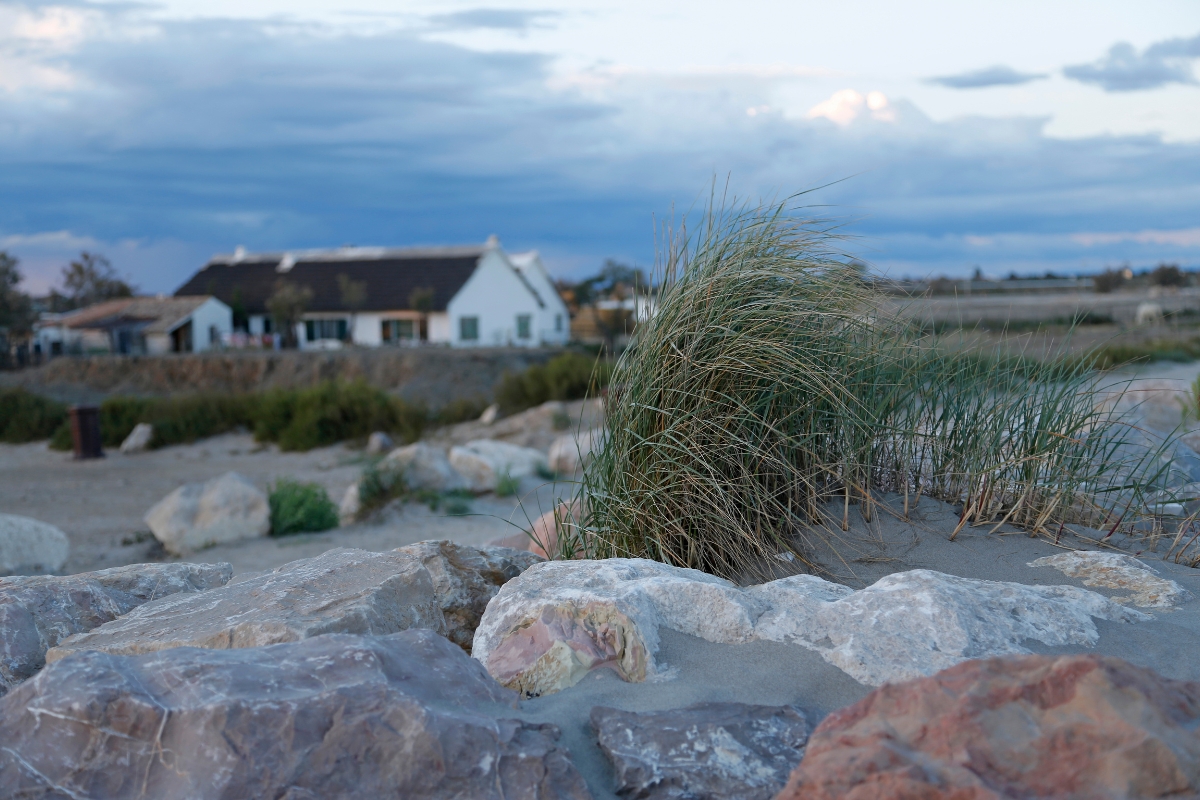
Miraculously, the boat survived the Mediterranean crossing and came ashore on the wild coast of what is now the Camargue. The place where they landed would eventually bear their names: Saintes-Maries-de-la-Mer, the Holy Marys of the Sea.

From this landing point, the group dispersed to spread the gospel throughout Provence. Lazarus became the first Bishop of Marseille. Martha traveled to Tarascon, where legend says she tamed a fearsome dragon called the Tarasque. And Mary Magdalene, after years of preaching in Marseille and Aix-en-Provence, withdrew from the world entirely—retreating to a cave high in the Sainte-Baume mountains for the final three decades of her life.

Walk in Their Footsteps: Saintes-Maries-de-la-Mer

The fortified church of Saintes-Maries-de-la-Mer rises from the flat marshlands of the Camargue like a sentinel, visible from kilometers away. Built between the 9th and 12th centuries as both a place of worship and a refuge from Viking and Saracen raids, its massive walls still contain a freshwater well—a reminder of the sieges this community once endured.

Inside the dim sanctuary, climb to the upper chapel where a painted reliquary chest, said to contain the bones of Mary Salome and Mary Jacobe, hangs suspended above the altar. Each year during the May pilgrimage, this chest is ceremoniously lowered for veneration in a ritual that has continued for centuries.

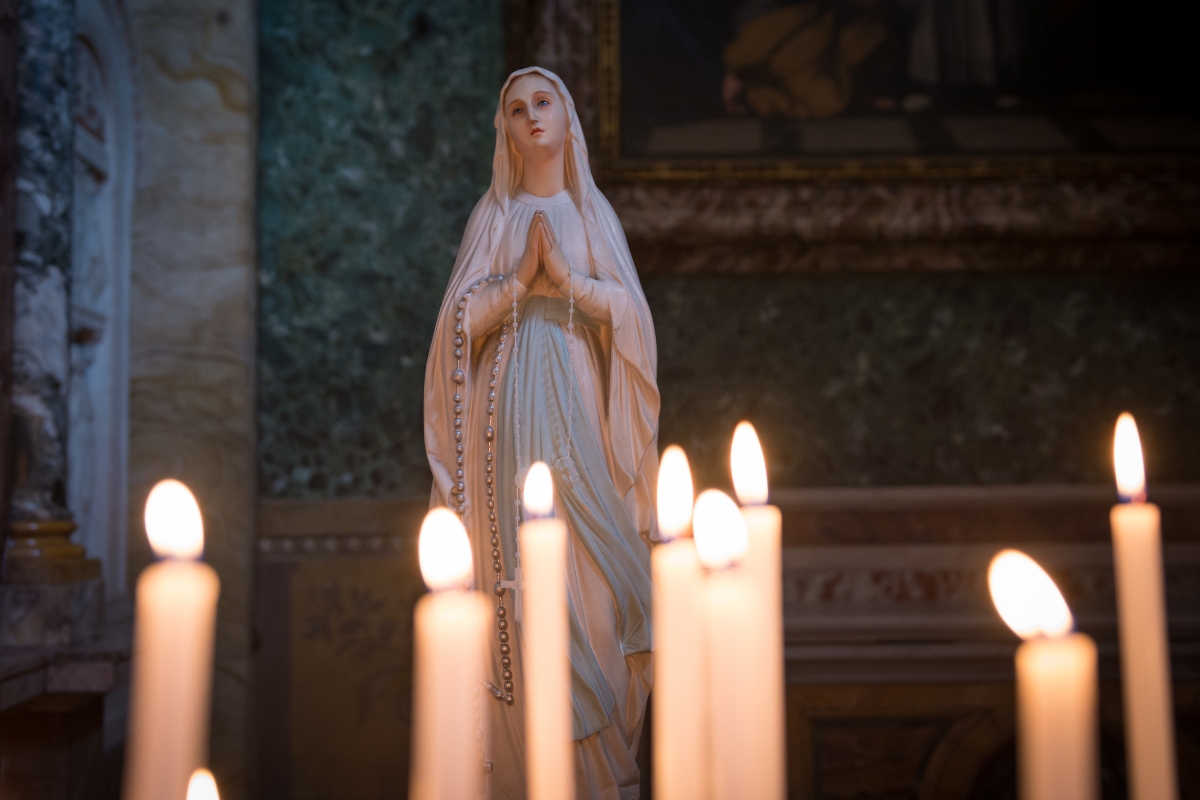
But the most powerful experience awaits in the crypt. Here, in the flickering light of countless candles, stands the statue of Sarah—Sara la Kali, the Black Sarah—dressed in layers of colorful robes and jewelry left by devoted pilgrims. Her dark face gazes out with an expression of profound stillness, drawing visitors into a silence that feels both ancient and immediate.

Sara la Kali: The Black Saint of the Roma

The story of Saint Sarah adds another layer of mystery to the Magdalene legend. Was she the Egyptian servant who accompanied the Marys from Palestine? A local Provençal woman who welcomed the holy refugees? Or, as some Roma traditions hold, a tribal leader who experienced visions foretelling the saints’ arrival and waded into the sea to guide them safely to shore?

What is certain is that Sarah has become the beloved patron saint of the Roma people, who call her Sara la Kali—”Sara the Black” in Romani. Every year on May 24th and 25th, tens of thousands of Roma from across Europe descend on this small seaside town for one of France’s most remarkable pilgrimages.

The celebrations are electric with devotion. The crypt fills with pilgrims lighting candles and offering prayers, the heat and emotion palpable in the underground space. Sarah’s statue, laden with fresh robes and jewelry, is carried on the shoulders of the faithful from the church to the sea, retracing the path of that miraculous arrival nearly two thousand years ago. The following day, statues of the two Marys make the same journey, accompanied by gardians—the traditional cowboys of the Camargue—on their distinctive white horses.

It is a scene unlike anything else in France: an ancient ritual of welcome and blessing, where the borders between legend and living faith dissolve entirely.

The Sacred Mountain: La Sainte-Baume

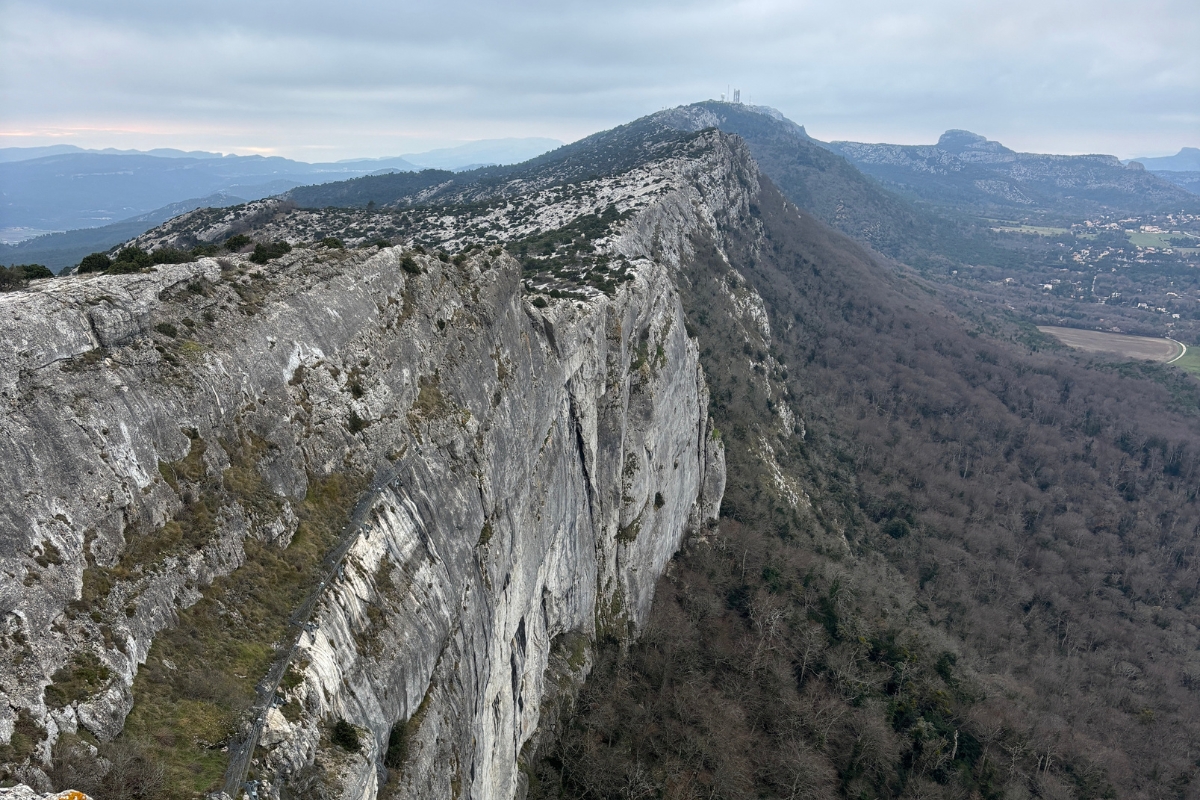
After years of evangelizing in Provence, Mary Magdalene withdrew from public life. According to tradition, she retreated to a cave high on the cliffs of the Sainte-Baume massif—a name derived from the Provençal word “baumo,” meaning cave or grotto.

Here, in this natural sanctuary carved by millennia of erosion, she is said to have spent thirty years in prayer and contemplation. Legend holds that angels lifted her to heaven seven times daily for spiritual nourishment, and that she wore nothing but her own hair, which grew miraculously to cover her body.

The grotto has been a Christian pilgrimage site since at least the 5th century, making it one of the oldest in the Western world. It was already ancient when the Dominicans were installed as its guardians in 1295. Kings of France—including Louis IX (Saint Louis), Francis I, and Louis XIV—made the pilgrimage here. So did popes, saints, and countless ordinary believers seeking healing, forgiveness, or simply a moment of profound stillness.

The Pilgrim’s Path

The approach to the grotto is itself a spiritual experience. From the Dominican hostelry at the foot of the mountain, the Chemin des Rois—the Kings’ Path—winds upward through an ancient forest that feels almost primeval. Unlike the sun-baked garrigue typical of Provence, this north-facing slope harbors a microclimate that supports towering oaks, beeches, and lindens, some over 400 years old. The Dominicans attribute this lush greenery to the miraculous energy of Mary Magdalene herself.

The walk takes approximately 45 minutes, climbing steadily through the forest’s green cathedral. Stations of the Cross mark the path. The air grows cooler. And then, suddenly, the trees fall away and you arrive at the cave mouth—a vast natural amphitheater carved into the cliff face, capable of holding a thousand pilgrims.

Inside, a small chapel has been installed within the grotto, along with a reliquary containing some of Mary Magdalene’s relics. A Dominican friar is always present, maintaining a tradition of prayer that has continued here for over seven centuries. The silence is profound—the kind that seems to deepen the longer you remain.

For those with energy remaining, the path continues upward to the Saint-Pilon, a small chapel at the mountain’s summit. From here, the view encompasses virtually all of Provence: the Mediterranean glinting to the south, the peaks of the Alps rising to the east, and fold upon fold of lavender-scented hills stretching toward the Rhône.

Practical Information: La Sainte-Baume

The grotto is accessible year-round, though the path can be slippery in wet weather. Sturdy walking shoes are essential. The hostelry at the base of the mountain offers simple accommodations and meals for pilgrims, maintaining its centuries-old tradition of welcome.

Mass is celebrated in the grotto several times weekly, and the atmosphere during these services—with natural light filtering through the cave mouth and voices echoing off ancient stone—is unforgettable.

The Basilica of Saint-Maximin: The Third Tomb of Christendom

Mary Magdalene’s story in Provence concludes at Saint-Maximin-la-Sainte-Baume, a bustling market town some 40 kilometers east of Aix-en-Provence. Here, according to tradition, she descended from her mountain retreat to receive final communion from Saint Maximin, the first Bishop of Aix, and was buried in an oratory he built in her honor.

For centuries, pilgrims venerated her tomb. Then, in the 8th century, with Saracen invasions threatening, her remains were hidden and their location forgotten. The site faded from prominence. Vézelay in Burgundy began claiming to possess her relics, drawing the pilgrimage traffic northward.

Everything changed on December 10, 1279, when Charles II of Anjou, Count of Provence, ordered excavations beneath the old church. Workers discovered a marble sarcophagus—and when they opened it, a fragrance of perfume is said to have filled the air. Inside lay an intact body, a glass vial said to contain traces of Christ’s blood, and a note explaining that the remains had been hidden in 710 to protect them from the Saracens.

Charles immediately commissioned a grand basilica to house the discovery. Construction began in 1295 and continued for over two centuries, creating the largest Gothic church in Provence and one of the most important pilgrimage destinations in Christendom—known as the “third tomb” after Jerusalem and Rome.

Exploring the Basilica

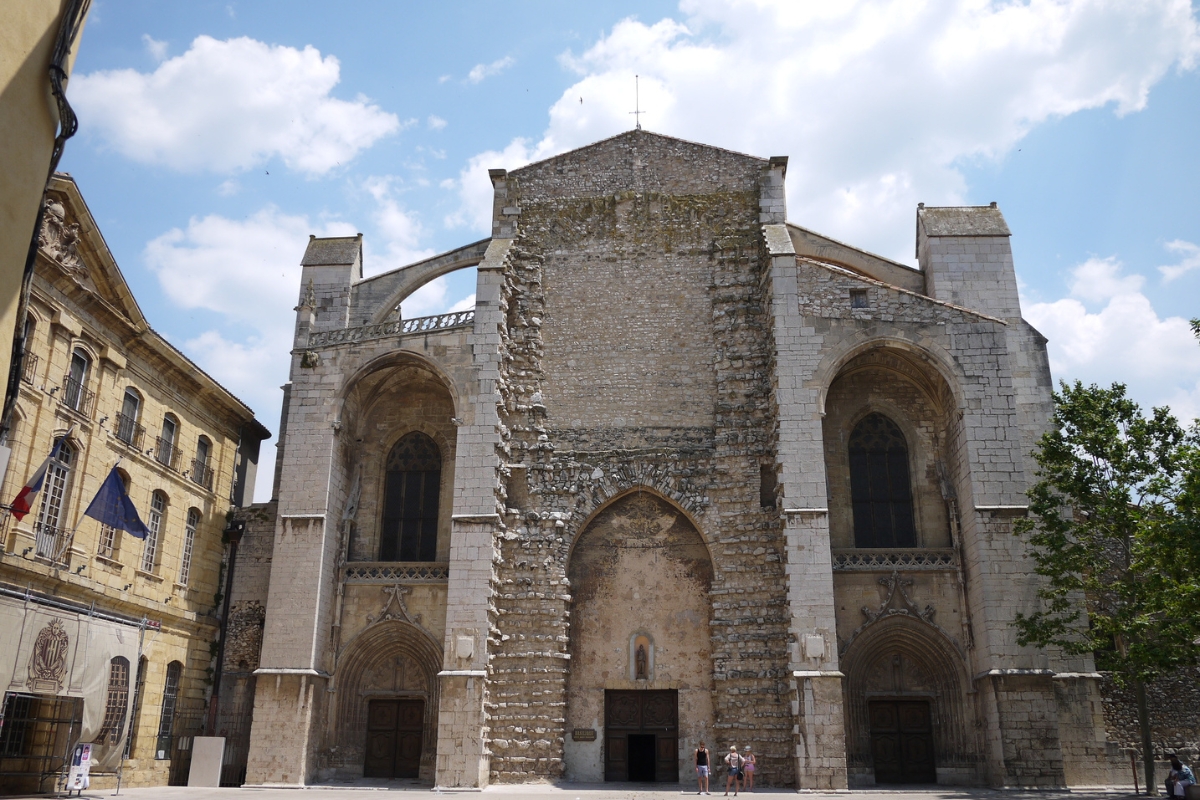
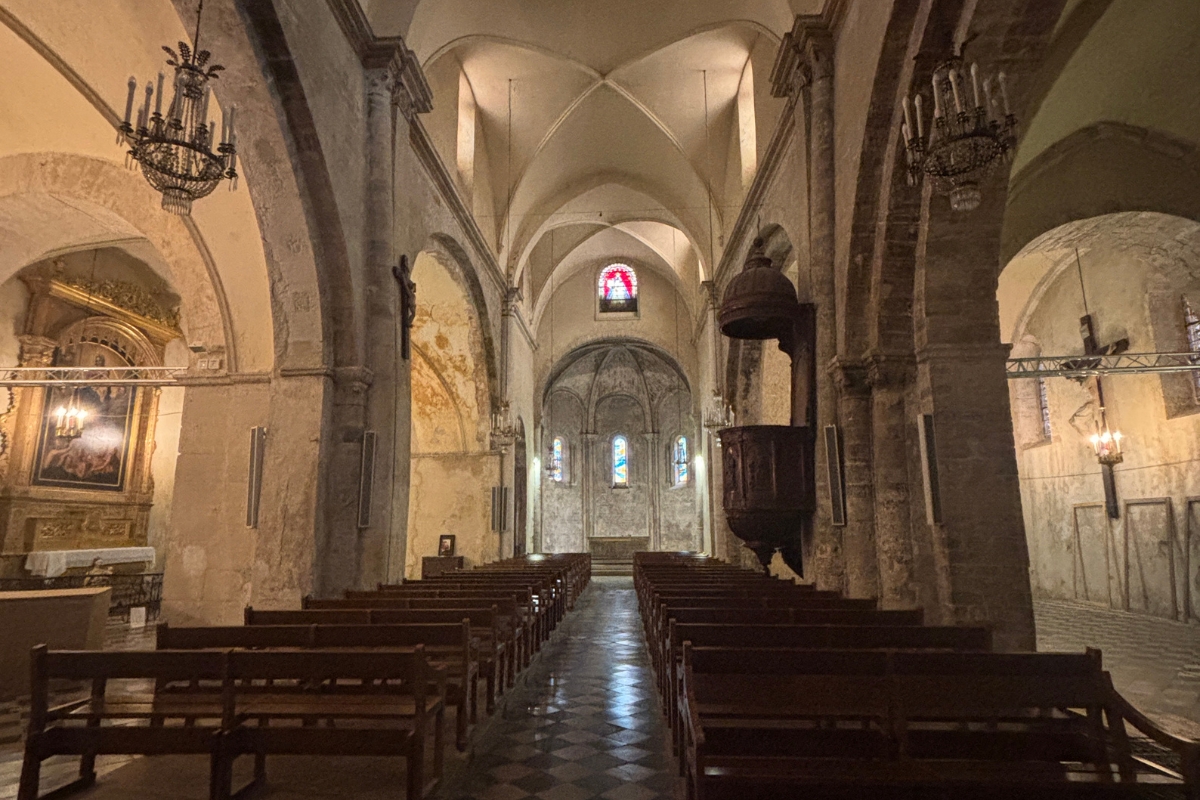
The Basilica of Saint Mary Magdalene dominates the town of Saint-Maximin. Its austere exterior—the facade was never completed, and the building lacks the towers originally planned—belies the soaring Gothic interior within. Light pours through high windows, illuminating a forest of columns that draw the eye toward the magnificent 17th-century organ, one of the finest in France.

But the heart of the basilica lies below. Descend to the crypt, a small underground chamber housing four 4th-century Gallo-Roman sarcophagi, including the one said to have contained Mary Magdalene’s remains. At the rear of the crypt, a golden reliquary holds what is believed to be her skull, its eye sockets gazing outward behind a gilded mask.

Modern testing has confirmed that the relics belong to a Mediterranean woman from approximately the 1st century who died around age 90. Whether they truly belonged to the woman who first witnessed the resurrection of Christ remains, of course, a matter of faith.

On the Sunday closest to July 22nd—Mary Magdalene’s feast day—the skull is carried in solemn procession through the streets of Saint-Maximin, a tradition that has continued for over seven centuries.

The Black Madonnas of Provence

The veneration of Mary Magdalene in Provence is deeply intertwined with another ancient tradition: the cult of the Black Madonna. Southern France contains at least 180 Vierges Noires—more than any comparable region—and understanding their presence helps illuminate why these lands became so central to the sacred feminine.

Black Madonnas are statues or paintings of the Virgin Mary depicted with dark skin. Some darkened over centuries of candle smoke and oxidation. Others were carved from dark wood or deliberately painted black from the beginning. Scholars have long debated their origins: Are they Christianized versions of earlier earth goddesses—Isis, Cybele, Artemis of the Trees? Do they represent a more historically accurate depiction of a Middle Eastern Mary? Or do they embody spiritual qualities—the fertile darkness of the womb, the mystery of transformation—that transcend any single explanation?

What is certain is that Black Madonnas have drawn pilgrims with particular fervor, their unusual appearance marking their shrines as places of exceptional power. And in Provence, the veneration of these dark-faced Virgins sits alongside the Magdalene tradition in a landscape saturated with the sacred feminine.

Notre-Dame du Romigier: Manosque’s Ancient Protectress

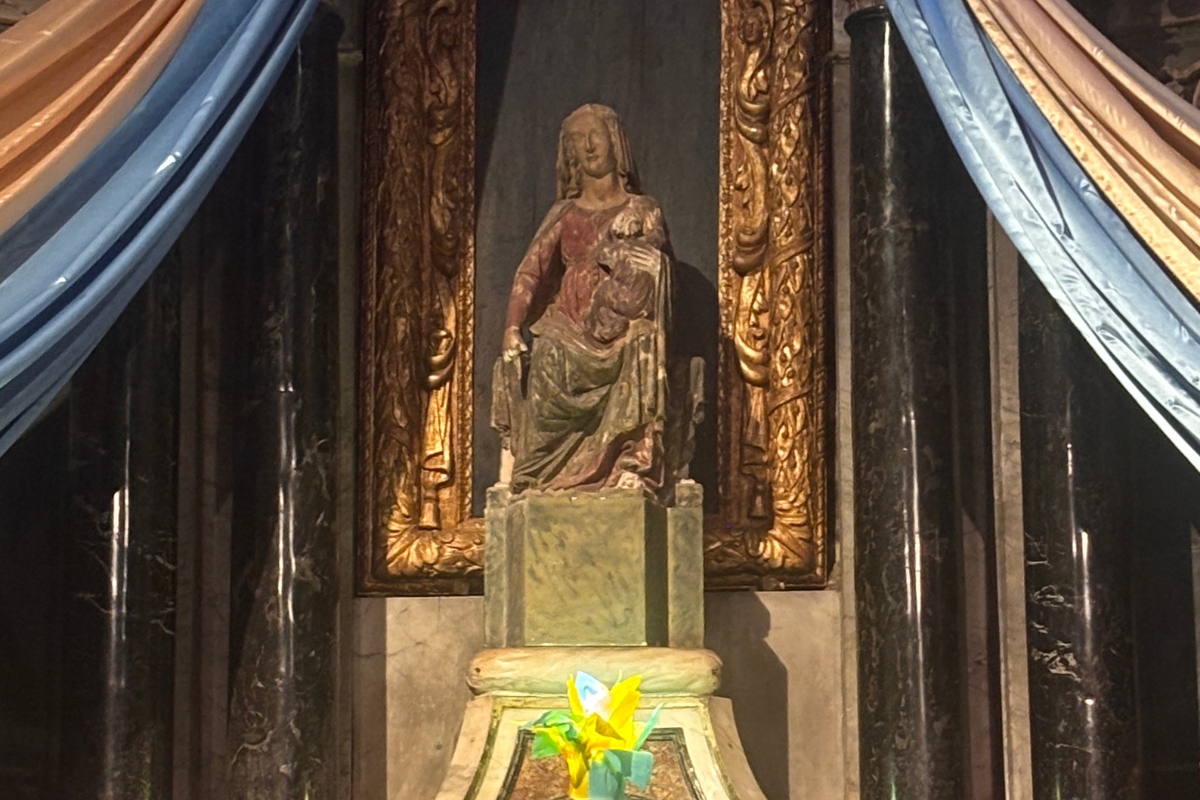
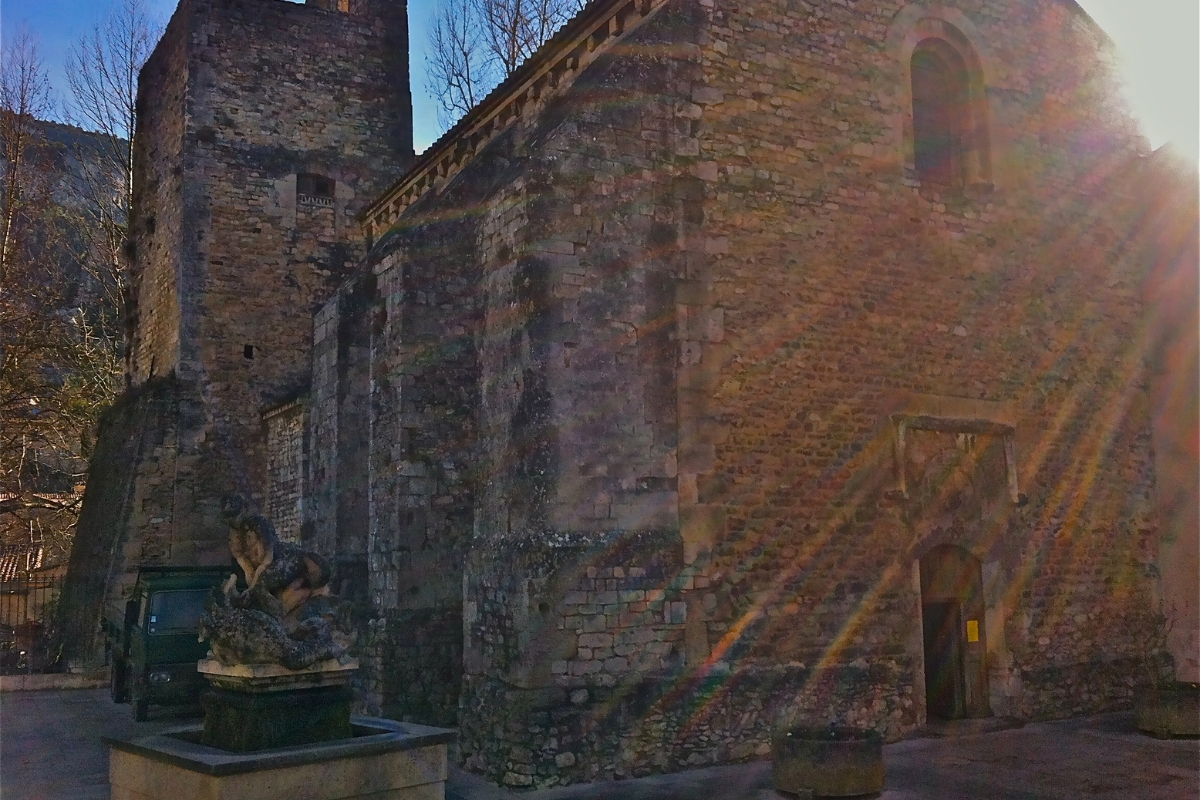
One of France’s oldest Black Madonnas resides just an hour from Saint-Maximin, in the Luberon town of Manosque. The Church of Notre-Dame de Romigier sits on one of the town’s most ancient sites—excavations have revealed tombs dating to the 1st through 3rd centuries, and the first church was built here in the 5th century.

According to legend, the Black Madonna was discovered in the 10th century by a plowman whose oxen stopped before a bramble bush and refused to move. Digging beneath the roots, he unearthed a magnificent ancient sarcophagus containing an intact statue of the Virgin and Child. The bramble—”roumi” in Provençal—gave the church and its Madonna their name: Our Lady of Romigier.

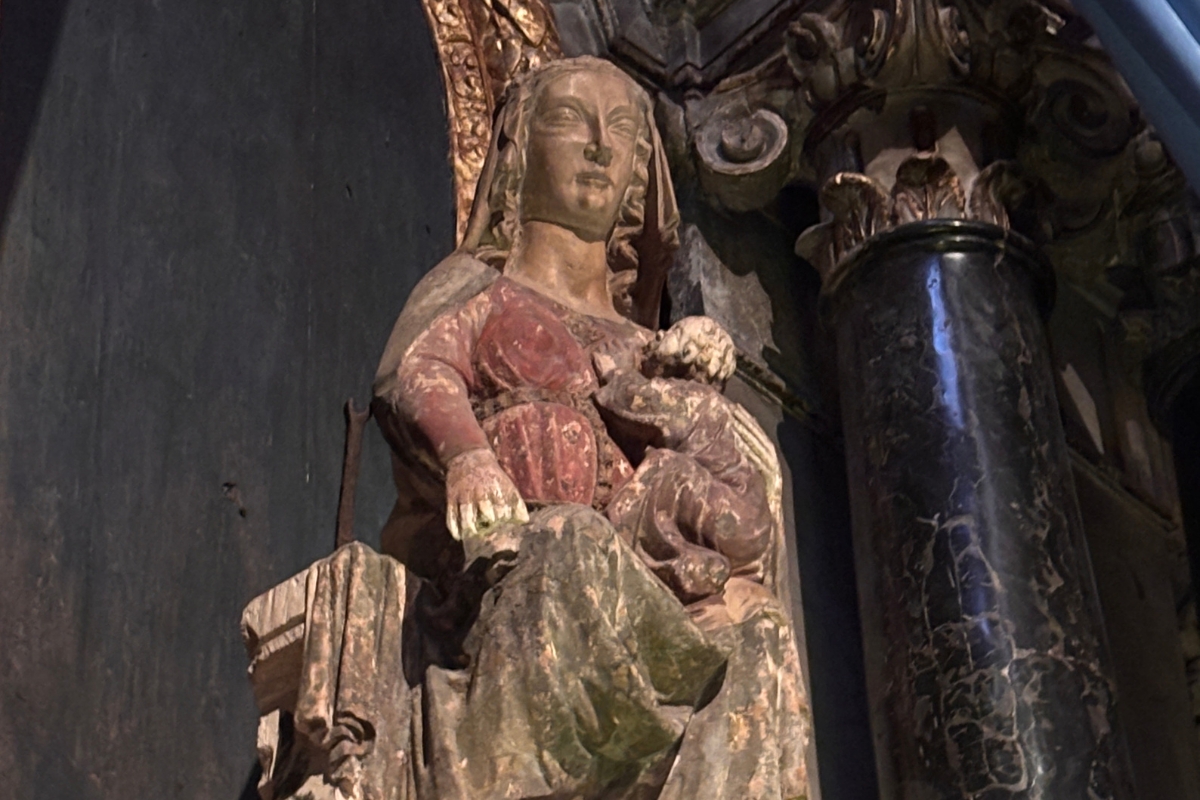
Scholars date the carved alder-wood statue to the 12th century, though tradition holds it was hidden during the Saracen invasions of the 8th century. Recent restoration revealed traces of original polychrome painting—blue, red, pink—beneath the darkened surface. But for the Manosquins, her blackness is part of her power.

Notre-Dame du Romigier has long been invoked by women in childbirth, by parents of stillborn children hoping for miraculous revival, and by those who have suffered dangerous falls. The ancient sarcophagus in which she was found now serves as the church’s altar, its early Christian bas-reliefs depicting the apostles in a style characteristic of 5th or 6th century Arles.

Other Black Madonnas in the Region

While Notre-Dame du Romigier is the most significant Black Madonna in Provence proper, the broader region offers several other venerated statues:

Marseille: Notre-Dame de la Confession at the Abbey of Saint-Victor, one of the oldest Christian sites in France, houses a Black Madonna in its ancient crypt.

Aix-en-Provence: Notre-Dame des Grâces can be found in the Cathédrale Saint-Sauveur, the same cathedral that witnessed the childhood of the Four Princesses of Provence.

For travelers drawn to explore the Black Madonna tradition more deeply, the trail extends beyond Provence to Le Puy-en-Velay, Rocamadour, and Chartres—each a major pilgrimage destination in its own right.

The Connection: Magdalene and the Dark Virgin

Why do these two traditions—the veneration of Mary Magdalene and the cult of the Black Madonna—so often overlap? Why does Provence, of all places, hold both with such intensity?

Some scholars point to geography. This coast was a crossroads of the ancient world—Phoenician, Greek, Roman, North African. Marseille was founded by Greek colonists in 600 BC, and they brought their goddess traditions with them. The worship of Isis, Cybele, and Artemis flourished here for centuries before Christianity arrived. When the new faith spread, it absorbed and transformed these older devotions rather than erasing them entirely.

Others emphasize Mary Magdalene’s unique theological position. In the Gospels, she is the first witness to the resurrection—the one who carries the news of Christ’s rising to the male apostles. For this reason, Thomas Aquinas called her the “Apostle to the Apostles.” Her story embodies themes of transformation, redemption, and spiritual authority that resonate with the Black Madonna’s symbolism of the fertile darkness from which new life emerges.

Still others point to the land itself. Provence’s limestone caves and sacred springs were venerated long before any organized religion claimed them. The grotto of La Sainte-Baume was sacred to the Druids before Mary Magdalene—if she indeed came here—ever arrived. The landscape seems to invite this kind of devotion, and human beings have responded for millennia.

Whatever the explanation, the result is a region where the sacred feminine is woven into the very stones. To travel here is to encounter it everywhere: in wayside shrines and candlelit crypts, in ancient churches and mountain caves, in the faces of dark-skinned Madonnas and in the story of a woman who carried news of resurrection across the sea.

Planning Your Pilgrimage

The Mary Magdalene and Black Madonna trail can be experienced as a day trip from a well-positioned base, or as a multi-day journey of deeper exploration. Here are suggestions for both approaches:

A Full Day of Sacred Sites

From a villa in the Luberon or near Aix-en-Provence, it’s possible to visit the major Magdalene sites in a single (full) day:

Morning: La Sainte-Baume Arrive early at the Dominican hostelry and begin your ascent while the forest is still cool. Allow 45 minutes for the climb to the grotto, time for contemplation, and perhaps another 30 minutes to reach the Saint-Pilon summit for the panoramic views. Descend for a simple lunch at the hostelry.

Afternoon: Saint-Maximin-la-Sainte-Baume Drive 30 minutes to the basilica (the two sites share a name but are not adjacent). Explore the Gothic interior and descend to the crypt to see the reliquaries. If it’s a market day, browse the stalls in the squares around the church.

Evening: Return via Manosque (optional) For those with energy remaining, the Church of Notre-Dame de Romigier makes a meaningful stop on the drive back toward the Luberon. The contrast between its intimate Romanesque space and the vast Gothic basilica you’ve just left offers a fitting close to the day.

A Deeper Journey: Two to Three Days

Day One: Saintes-Maries-de-la-Mer and the Camargue Begin where the legend begins—at the shore where Mary Magdalene first set foot in France. Visit the fortress church, descend to Sarah’s crypt, and explore the wild landscapes of the Camargue. Consider a sunset horseback ride through the salt marshes, or a flamingo-watching excursion to the Étang de Vaccarès.

Day Two: Marseille and Aix-en-Provence In Marseille, visit the Abbey of Saint-Victor, one of the oldest Christian sites in Gaul, with its 5th-century crypt and Black Madonna. Then continue to Aix-en-Provence to explore the Cathédrale Saint-Sauveur, with its Romanesque cloister and the Notre-Dame des Grâces Black Madonna.

Day Three: La Sainte-Baume and Saint-Maximin Devote a full day to the twin culminations of the Magdalene trail: the mountain grotto where she spent her final decades and the basilica where her relics rest. Allow ample time for the forest walk and for contemplation in both sacred spaces.

Timing Your Visit

Timing Your Visit

The Mary Magdalene trail is meaningful year-round, but certain dates carry special significance:

May 24-25: The Roma pilgrimage to Saintes-Maries-de-la-Mer, when tens of thousands gather to honor Saint Sarah. An extraordinary experience, but accommodation is scarce.

July 22: Mary Magdalene’s feast day, celebrated with special masses and processions at both La Sainte-Baume and Saint-Maximin.

October (third weekend): A smaller pilgrimage at Saintes-Maries-de-la-Mer honoring Mary Salome and Mary Jacobe.

For contemplative visits outside the major festivals, spring and autumn offer ideal conditions—mild temperatures, manageable crowds, and landscapes at their most beautiful.

Beyond Tourism: The Pilgrim's Mindset

There is a difference between visiting these sites as a tourist and approaching them as a pilgrim—and it has less to do with religious belief than with attitude.

A tourist moves quickly, checking sites off a list, snapping photos, moving on. A pilgrim slows down. A pilgrim walks when possible rather than driving. A pilgrim sits in silence, allowing the accumulated prayers of centuries to become palpable. A pilgrim asks not just “What happened here?” but “What does this place have to teach me?”

You need not share the faith of the medieval pilgrims to benefit from their approach. The forest path to La Sainte-Baume rewards slow walking. The crypt at Saintes-Maries-de-la-Mer reveals its power only to those who linger. The Black Madonna at Manosque has looked into the eyes of countless visitors over eight centuries; she has time for those who make time for her.

These sites have drawn seekers for nearly two thousand years because they offer something our hurried world makes increasingly rare: the chance to step outside ordinary time, to encounter landscapes and spaces that feel genuinely sacred, and to connect with the countless human beings who have stood in these same spots, asking the same eternal questions.

Experiencing Sacred Provence from Your Private Villa

The pilgrimage sites of Provence reveal themselves most fully to those who have time to linger—who can return to a peaceful home base each evening, process the day’s encounters, and approach the next sacred site refreshed rather than rushed.

This is the advantage of experiencing the Magdalene trail from a private villa or château. Rather than packing your bags each morning for the next hotel, you establish a home in the landscape. You wake to views of the hills that Mary Magdalene—if legend is true—walked nearly two millennia ago. You return each evening to a terrace overlooking lavender fields, a glass of local rosé in hand, with space to reflect on what you’ve experienced.

From a well-positioned estate in the Luberon or near Aix-en-Provence, all the major sites lie within easy reach. You can choose to make the pilgrimage by day and return to modern comforts by night—or simply absorb the sacred geography gradually, letting one site lead naturally to the next as your own journey unfolds.

Recent Articles You Might Enjoy

A distinct collection of luxury villa rentals and real estate for sale in the South of France

- offering all comforts and amenities - pool, housekeeping, and chef services.

© 2026 Only Provence

Jumping the Picket Fence Light Through the Cracks

Only Provence co-founder Lydia Dean writes about their experiences raising a family, building a business in Provence, and later combining the love of travel with giving back in "Jumping the Picket Fence”. In 2021, she published “Light Through the Cracks,” a continuation of her journey, much of which has been based in Provence. Both books are available Amazon, Amazon.uk, and Amazon.Fr.